

TL;DR
The UK EV charge point market is still growing, but consolidation has begun.
Recent acquisitions signal positioning ahead of 2030. Expect motorway scale players, software-led destination aggregation and funding-driven street consolidation.
For fleets, network-neutral EV charging payment access becomes more important, not less.
When Will the EV Charge Point Market Consolidate?
Short answer: At Paua we believe this has already started. But full consolidation will accelerate between now and 2030.
For the past few years, the UK EV charging market has been in a clear growth phase. At Paua we have typically seen 1 to 2 new charge point operators launching each month. Recent entrants include Moto, BYD Charge, Stark Charge, Whizap, EZO and Ecofactor. See our full list of network partners here.
Yet in just the past week:
- Be.EV acquired Mer UK’s charging operations, adding 1,600 bays
- Shell Ubitricity acquired Sure Charge, adding 2,400 connectors and taking its network to 14,000+
- Connected Kerb acquired Trojan Energy’s assets out of administration
- Plug Charging buys 350 UK sites from Wattif EV
Paua believes that this is not contraction, but a repositioning for 2030 ahead of scale.
This has in turn prompeted a new set of questions from fleet decision-makers.
Why Is EV Charging Market Consolidation Happening Now?
We believe the answer is simple: 2030.
- Regiulation dictates that every new car sold in the UK will be electric
- Business fleets will scale rapidly driven in party by corporate objectives and in part by buying mandates from vehicle manufaturers
- Utilisation now matters more than installation numbers
- Capital is becoming disciplined (we have already seen a progress away from VC funded charge points to lower cost of capital including private equity and even debt)
As fleets move from 20 EVs to 200 or 2,000, risk tolerance drops. And confidence to invest grows.
Our fleet partners are asking us:
- Will my preferred network still exist in five years?
- What happens if a major operator gets acquired?
- Will prices rise as the market matures?
- Am I exposed to single-network dependency?
We currently have around 150 charge point operators in the UK. That number will not remain static. A combination of growth and consolidation will change this
The Three Types of EV Charge Point Market Consolidation I Expect
1. Strategic Road Network Consolidation
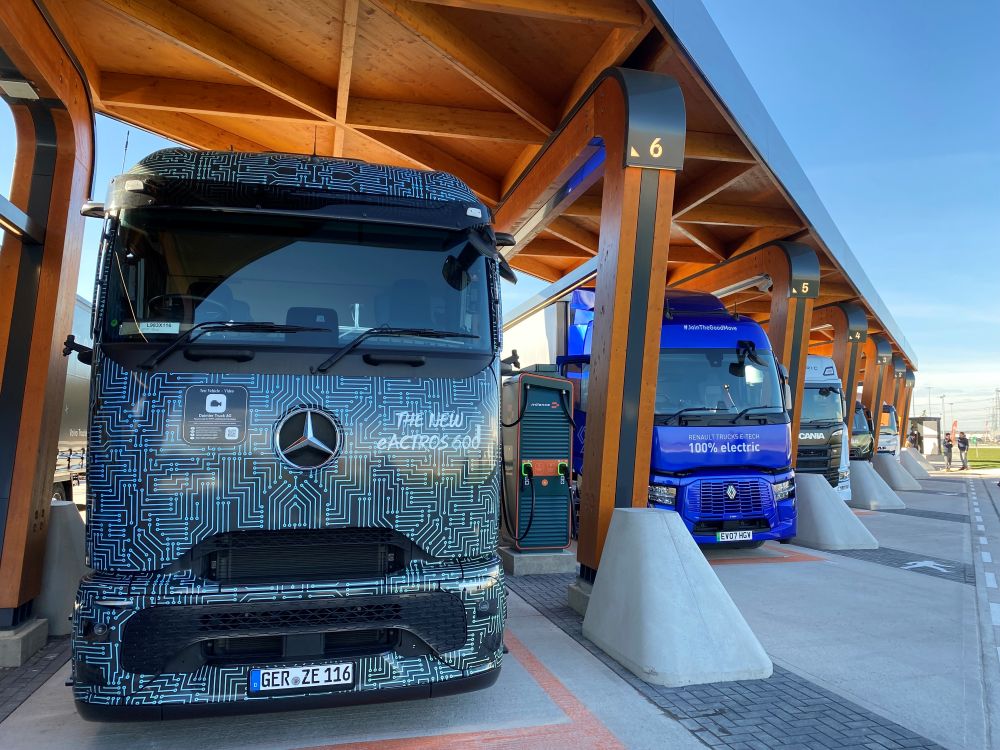
Motorways and trunk roads will support a limited number of ultra-rapid operators. This is a high-capex, high-grid, high-uptime environment. We expect a handful of serious names to dominate and we anticipate these to be names that we already know.
Fleet concerns rasied to us:
- Will coverage remain broad?
- Will pricing concentrate?
- Will access fragment?
Scale and competitoin should improve reliability (if not regulation will). But neutrality of access will matter more to businesses.
We expect to see more choice for larger vehicles and improved solutions for commercial operators.
2. Software-Led Consolidation in Destination Charging
Retail parks, hospitality and commercial estates will see software aggregation.
Hardware may remain fragmented. After all, a retail destination can pay for hardware to be installed and place their own logos onto this. But the software, call centres and maintenance services are likely to be outsourced.
Think:
- Monta-operated retail park chargers
- Fuuse-managed estates
- Pub chains buying software providers in to manage the estate but each pub charger has differing branding
Fleet concerns raised:
- Will drivers need more apps?
- Will reporting become inconsistent?
- Will data continuity suffer during acquisitions?
As above regulation will continue to shape experience. Software orchestration could well become the stabiliser in a shifting ownership landscape. Paua would continue to work across a range of partners
3. Funding-Led Consolidation in On-Street Charging
On-street charging remains politically and financially complex. This is the area where Paua is least certain what the future could hold.
- It is largely dependent on government funding
- Without a loyal users base it can be heavily margin constrained
- Local authority influenced, not necessarily commercially optimised
Consolidation here will be slower and shaped by public funding cycles.
Fleet concerns we have heard:
- Will access terms change?
- Will reliability improve?
- Will infrastructure standardise?
We recognise that increasing numbers of vehicles live on the street overnight and this remains a delicate growth segment for some of our partners. Paua will continue to track this.
What Does EV Charging Market Consolidation Mean for Fleets?
It does not mean fewer chargers. It should mean higher quality.
It means:
- Larger operators
- Stronger balance sheets
- Higher uptime expectations
- Greater capital discipline
But also:
- Potential pricing concentration
- Operational disruption during acquisitions
- Platform transitions
- Driver retraining fatigue
At Paua we believe that the smart strategy is not to predict the winners, but to remain network neutral. We are excited that a number of our partners continue to grow with these approaches.
What Does This Mean for Paua and Paua EV Charge Card Users?
At Paua we believe consolidation strengthens the case for aggregation.
Since 2020, Paua has consistently added charging networks to our platform. As operators grow, merge or change hands, our role remains constant:
- Maintain broad access
- Protect fleets from single-network dependency
- Preserve unified billing and reporting
- Keep drivers using one EV charge card and one system
As noted above, as infrastructure consolidates physically, software-level aggregation becomes more important.
Business fleets do not need to pick winners but they do need an extensive network of reliable, high quality charging partners. Paua will continue to develop a market-leading EV charging payment solution as the UK charge point market matures.
So in conclusion; whilst chargers may consolidate. Access should not change. In fact with Paua you could say we have already consolidated the market for fleet customers.
Paua is the leading commercial vehicle charging payment platform. Read more about our EV charge card and mobile app for drivers. here


.jpg)
