
TL;DR
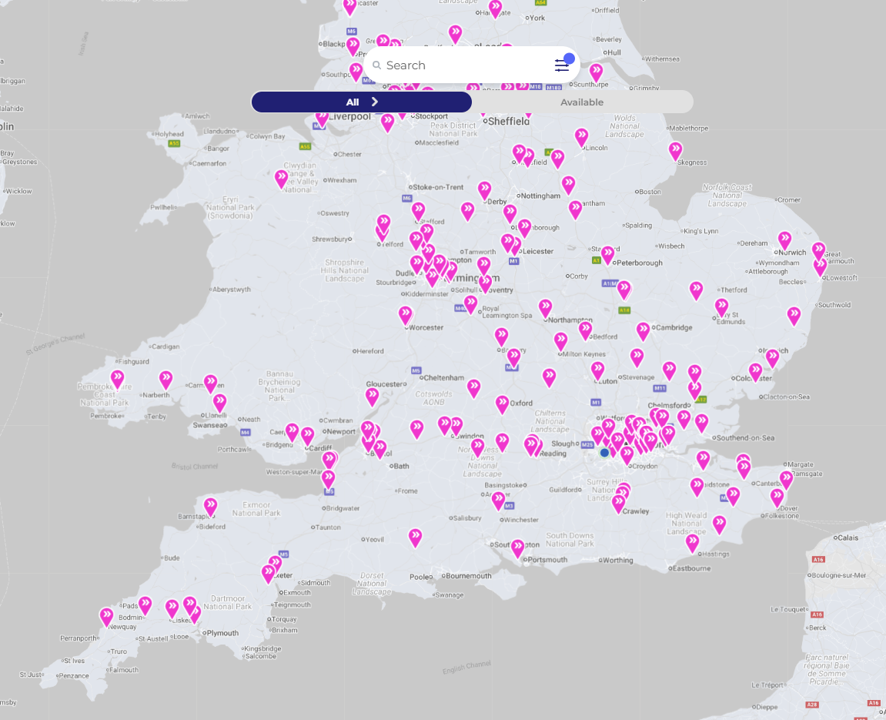
CHAdeMO coverage still looks reasonable at first glance, but reliability drops sharply when you factor in connector density.
As single connector sites become the norm, drivers adapt by planning charging more carefully.
Reliable EV charging is increasingly about redundancy, not just location.
What CHAdeMO teaches us about reliable EV charging
We have a Nissan Leaf.
That means CHAdeMO still matters in our household.
When I open the Paua map and filter for CHAdeMO connectors, the picture initially looks reassuring. Coverage across the UK is still reasonably strong. Plenty of locations show up, and on the surface it feels manageable.
But reliability isn’t just about coverage.
It’s about what happens when you arrive.
Connector count changes everything
When you refine the search to look for sites with five or more connectors, the story shifts quickly.
CHAdeMO availability drops off. Fast.
This isn’t surprising. CHAdeMO is no longer the dominant standard, and new infrastructure is overwhelmingly CCS focused. What remains tends to be:
- Single connectors
- Small sites
- Limited redundancy if something is broken or in use
For drivers, that difference matters far more than raw charger numbers.
Reliability beats proximity
From day to day use, a simple truth emerges:
- One charger nearby feels convenient
- Multiple chargers at the same site feels reliable
If you arrive and the only CHAdeMO connector is occupied or offline, the experience breaks down quickly. That’s when charging stops being seamless and starts requiring planning, backup options and workarounds.
Charging behaviour adapts fast
EV charging still follows a basic pattern:
find, charge, pay
When any one of those becomes harder, behaviour changes.
As CHAdeMO sites become less dense and less redundant, we find ourselves being more deliberate about where we charge. It’s no longer just about topping up when it suits us, but choosing locations where the odds are in our favour.
That shift happens quietly, but it’s significant.
Standards evolve, expectations don’t
This isn’t a criticism of network operators or the direction of travel. Standards evolve, and infrastructure investment follows demand.
But for drivers still using older standards, data quality, filtering and connector density matter more every year. Being able to see not just where chargers are, but how reliable a site is, becomes the difference between confidence and friction.
CHAdeMO still works.
It just rewards planning more than it used to.
And that’s a useful lesson for anyone thinking about what “reliable charging” really means.
Paua is the EV charging payment platform for business.
Try the Paua App to find chargers that meet your needs


.jpg)
