

TL;DR
The £360 Billion Transition: Why Business Vehicles Will Drive the Electric Shift
There are moments in markets where the question is no longer if, but how fast.
European road transport is heading toward that moment. And understanding the scale of that shift is key. in this article we will dig a little deeper into what that could look like.
Every year, across the EU, roughly 245 billion litres of petrol and diesel are sold. When you apply a weighted average fuel price, around 66% diesel and 34% petrol, that equates to roughly:
£360 billion of annual road transport energy spend
(Sources: EU Fuel Quality Disclosure 2023 data (AA Sales in Litres), RAC pricing data)
This is not a forecast. This is cash already being spent based on 2023 European Union data with an uplift added to cover the UK.
And over the coming decades, that £360bn does not disappear. It migrates from one fuel type to the next; electricity.
We have attempted to estimate the speed of that transition from various market data points and commentator views. Note that we may never get to 100% electric due to legacy vehicles, hydrogen fuels or hard to treat specialist vehicles.

A Market That Cannot Shrink
It is tempting to assume electrification reduces the size of the prize because electricity is “cheaper”.
But there is an important structural reality here. Tax.
A large proportion of that £360bn is:
- Fuel duty
- VAT applied on top of duty
- A core revenue stream for European governments
In the UK alone, fuel duty and VAT represent tens of billions annually. Across Europe, it is a foundational fiscal pillar.
Governments will not allow transport tax revenues to evaporate. So whilts the energy vector changes, the fiscal gravity does not. And some form of tax revenue must continue.
Further to this we have to re-build the infrastructure associated with this transition. Whereas fuel costs include a marginal amount of cost towards a petrol station this is mostly a depreciated cost. New EV charging stations and new grid connections are very real and present in the total cost of charging.
Even if 10 to 20% of road energy demand never fully electrifies, think heritage vehicles, specialist equipment, edge hydrogen cases, you are still looking at an addressable energy transition of roughly:
£290bn to £325bn annually across Europe.
This is not a niche technology story. This is a generational capital rotation.
Zooming into the UK Context
The UK represents roughly 15% of European vehicles. Using the same approach, that implies:
~£54bn annual road transport energy spend in the UK alone.
(EU share assumption from ACEA, UK vehicle parc data from Department for Transport)
Now layer in electrification.
At the end of 2024:
- 40.8 million vehicles were licensed in the UK
- 1.39 million were zero emission
- That is just 3.4% of the vehicle parc
(DfT vehicle licensing statistics)
But in 2024:
- 16% of all new vehicles were zero emission
- 19% of new cars were zero emission
(DfT + New Automotive)
The S-curve has clearly started. We have We are no longer debating adoption.
We are debating speed.
Why Business Vehicles Dominate Early
Here is where the story gets interesting and also partly why Paua chose to focus on business vehicles.
If you break down the UK zero emission vehicle parc:
- 1.287 million are cars
- 86,000 are vans
- Heavy goods vehicles and buses are still small
(DfT licensing statistics)
Now make a simple but powerful assumption: All electric vans are business vehicles.
That immediately assigns roughly 6% of all UK ZEVs to business use.
Then consider electric cars.
New Automotive and related market data show that a very large proportion of new EV registrations are:
- Company cars
- Salary sacrifice vehicles
- Leased vehicles (financed by a business)
In other words, business financed or business controlled.
Even under conservative assumptions:
- 65% of EV cars are business controlled
- 100% of vans are business

That implies:
Around two thirds of the UK zero emission vehicle parc is business financed or controlled.
Under more aggressive assumptions, that share rises towards 75%.
Either way, our conclusion is clear: The EV transition is being driven by fleets, employers and leasing structures.
Not individual retail buyers. Yet.
Why That Matters
Business vehicles:
- Drive higher annual mileage
- Use public infrastructure more frequently
- Require reimbursement, cost allocation and control
- Need consolidated payment systems
- Care about reporting, VAT recovery and carbon accounting
These are all areas that a technology company can add value to a business. This is the second reason that Paua chose to focus on business vehicles.
Private motorists care about range. And a lower price.
Businesses care about systems. About operational performance. And about keeping the wheels of the business in motion.
This distinction is critical.
Because while the energy market is £360bn in size, the monetisable layer emerging around it, payments, software, control, data, optimisation, is disproportionately business led.
The Rollout Reality
Not every vehicle will electrify.
There will be:
- Edge cases
- Long tail specialist uses
- Technology plurality in some segments
- Technical and beauractratic delays.
But the direction is locked in by:
- Regulation
- Fleet economics
- Total cost of ownership
- Corporate decarbonisation commitments
At the end of 2024 3.4% of the vehicle parc electrified and ~20% of new registrations already zero emission, the UK is firmly on the early majority slope. By the end of 2026 we will be heading to 6% or more eletric vehicles on the roads.
Historically, this is the phase where infrastructure, payments and platform players are built.
Not at 1%.
Not at 80%.
But right here.
The Big Picture
So we can summarise the opportunity in four simple statements:
- £360bn of annual European road transport fuel (energy) spend is transitioning.
- The UK represents ~£54bn of that energy pool.
- Two thirds or more of current zero emission vehicles are business controlled.
- Business vehicles are structurally heavier users of public charging and energy services requiring solutions to help them transition.
The question is no longer whether transport electrifies.
The question is:
Who captures the systems layer around that £360bn transition?
---------
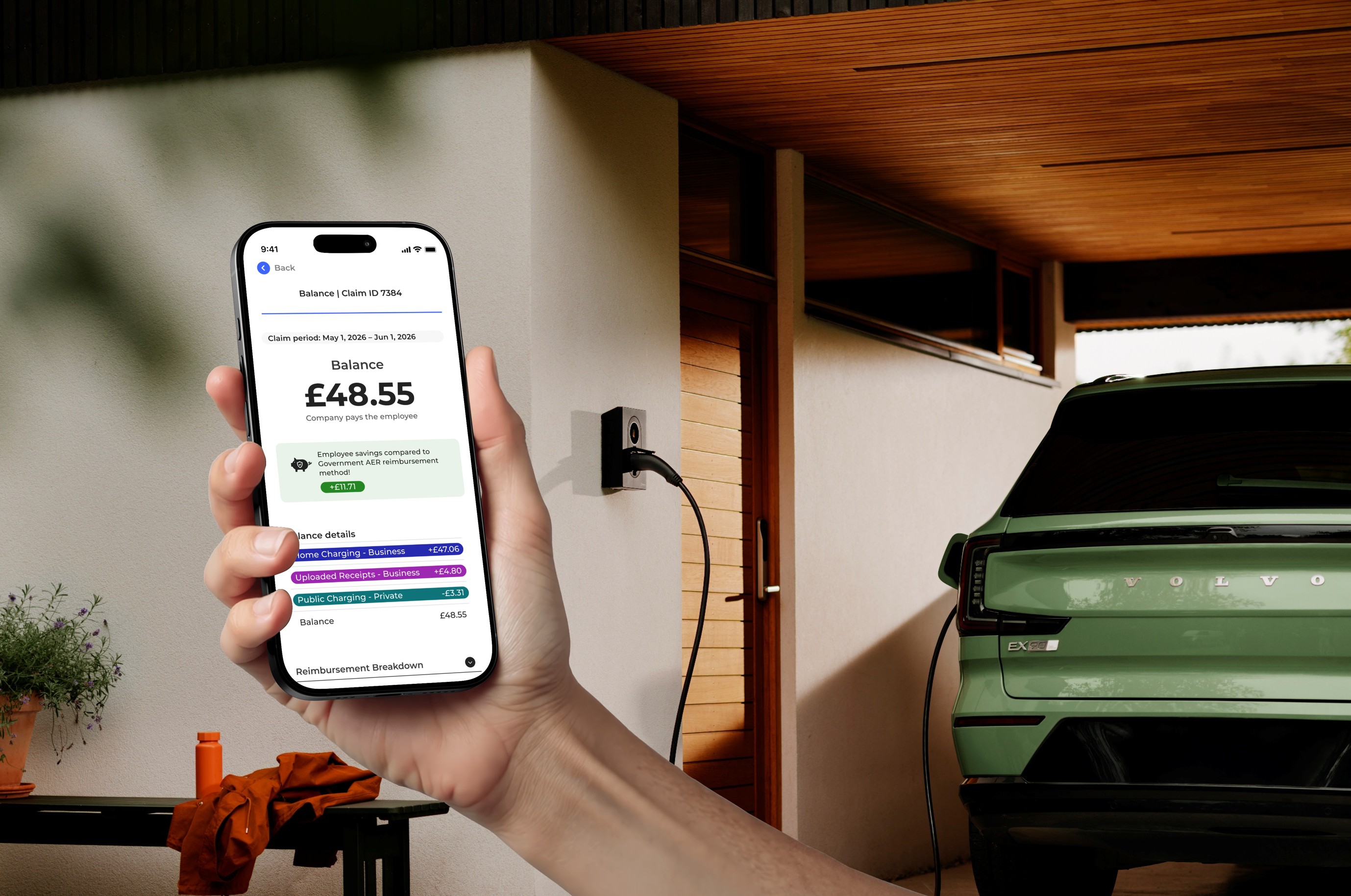
Paua is the EV charging payment platform for business. Paua is a business EV charging payment platform that enables fleets to manage public, home and workplace charging in one system. Paua.com
If you want to ensure that you manage your EV charging as a business read more about what we do here.


.jpg)
