TL;DR
Paua Reimburse simplifies EV mileage reimbursement for UK businesses by addressing unique challenges in tracking home, public, and workplace charging, differentiating business and personal miles, accommodating variable energy tariffs, and ensuring tax compliance. With comprehensive data capture and HMRC alignment, Paua Reimburse ensures fair, accurate, and efficient compensation for EV drivers.
Simplifying EV Mileage Reimbursement for Businesses: The Case for a Comprehensive Approach
As UK businesses increase the adoption of electric vehicles (EVs) within their fleets, managing mileage reimbursement becomes more complex. Traditional systems that worked for petrol and diesel vehicles simply aren’t equipped to handle the unique challenges of EV reimbursement. From tracking home charging to accounting for public network fees, the variables involved can lead to over- or under-compensation, administrative burdens, and even tax compliance issues.
This blog explains why UK businesses need a comprehensive system that captures data from home, public, and workplace charging, and how Paua Reimburse simplifies the process for fleet managers and drivers alike.
The Unique Challenges of EV Reimbursement
Unlike petrol and diesel vehicles, which have clear fuel costs per mile, electric vehicles bring a new level of complexity. EV drivers can charge at home, at public charging stations, or at the workplace, with each location having different associated costs. Without a system that can track these various charging sessions and apply them to specific business journeys, it’s easy to either overpay or underpay employees.
Moreover, the government’s Advisory Electricity Rate (AER) offers only a one-size-fits-all reimbursement model, which doesn’t account for the diversity in energy costs that drivers experience across different locations and times. This flat rate can lead to dissatisfaction among drivers and unnecessary financial strain on businesses.
The Case for a Comprehensive Approach
To ensure accurate and fair reimbursement, a comprehensive solution must be in place. This system should address key concerns like:
- Capturing charging data across multiple locations.
- Differentiating business and personal miles.
- Accommodating variable energy tariffs.
- Ensuring tax compliance.
1. Capturing Home, Public, and Workplace Charging Data
A significant challenge in reimbursing EV drivers fairly is the fact that they charge in multiple locations. Employees may charge their vehicle at home during off-peak hours, use a rapid charger while travelling, or plug in at a workplace charger. Each of these locations has different costs, which need to be accounted for to ensure accurate reimbursement.
Relying solely on the Advisory Electricity Rate may undercompensate drivers who frequently use public charging stations, where costs are much higher than at-home charging. Conversely, employees who charge at home on off-peak rates may be overcompensated if the AER is applied.
Solution: Paua Reimburse
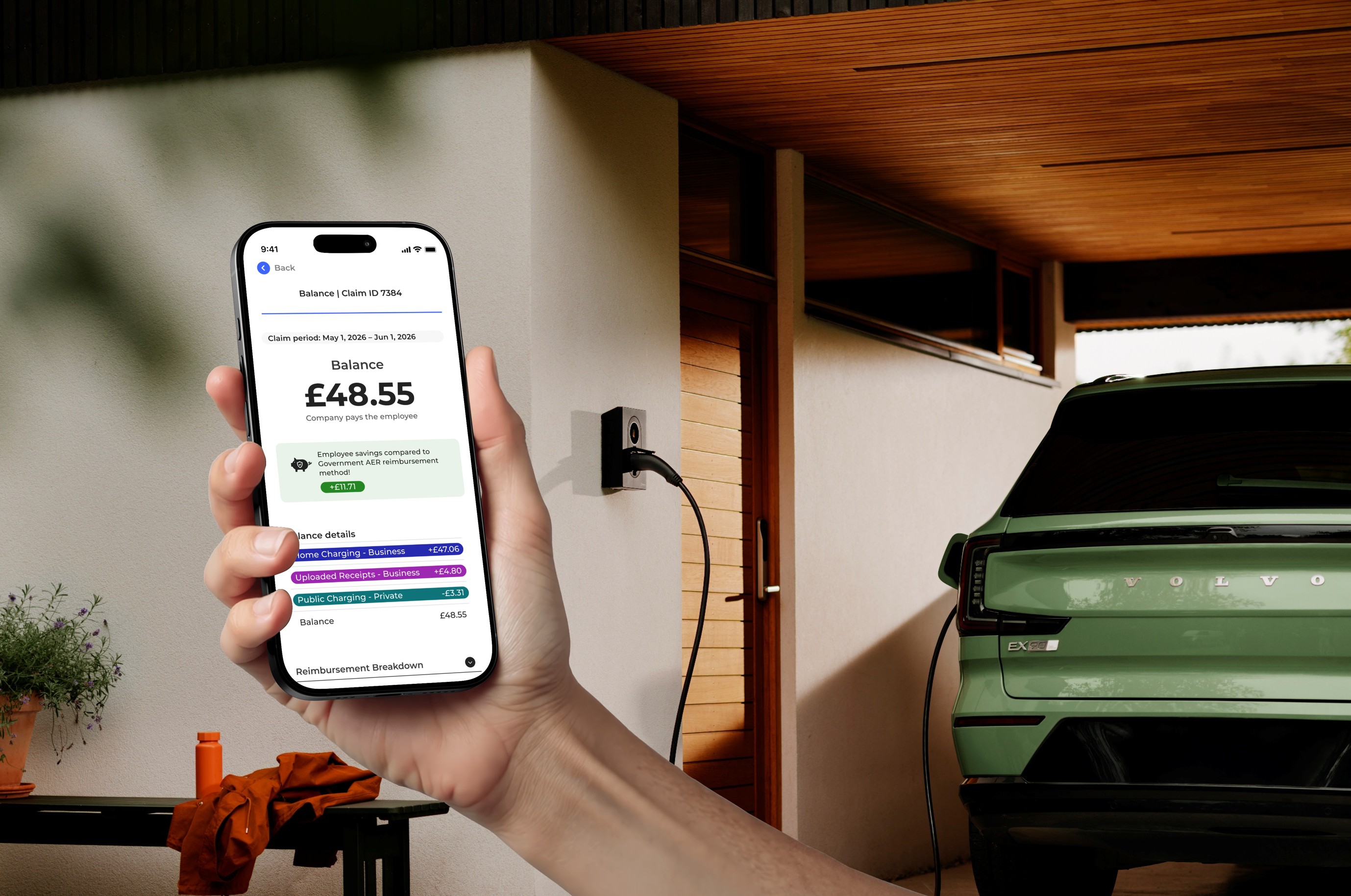
Paua Reimburse captures data from home, public, and workplace charging sessions, ensuring that businesses can fairly compensate employees based on their actual energy use. The system tracks where and when a vehicle is charged, applying different reimbursement rates to different charging locations.
2. Differentiating Business and Personal Miles
Another major challenge is distinguishing between personal and business mileage. With EVs, this challenge is amplified because there’s no fuel receipt to tie a specific journey to a cost. Without clear tracking, businesses may end up reimbursing drivers for personal miles, or drivers may not be fully compensated for their business travel.
Solution: Mileage Tracking Integration
Paua Reimburse integrates with mileage tracking tools to ensure that only business-related charging is reimbursed. This eliminates the risk of overcompensation for personal use while ensuring that drivers are paid fairly for their work-related charging costs. By tracking mileage alongside charging data, Paua Reimburse creates a clear, auditable record of business travel.
3. Accommodating Variable Energy Tariffs
Electricity costs vary significantly based on the time of day, location, and type of energy plan an employee uses. For example, drivers on time-of-use tariffs may charge their EVs during off-peak hours at a much lower cost, while others may use fast chargers on public networks that come with premium pricing. Applying a single flat rate for all charging locations and tariffs, such as the AER, leads to unfair reimbursement.
Solution: Dynamic Reimbursement
Paua Reimburse allows for variable tariffs by enabling the business to adjust their reimbursement policy based on their preferred approach to actual energy usage and the cost associated with that usage. Whether employees charge at home on an off-peak rate or use a rapid charger on a public network, the system calculates a fair reimbursement aligned to the business policy tailored to the specific circumstances of each business.
4. Ensuring Tax Compliance
EV mileage reimbursement must comply with UK tax regulations, which add an additional layer of complexity. HMRC-approved methods, such as accurate mileage capture and auditable reimbursement records, are essential for businesses to avoid any potential tax liabilities or penalties. The lack of a proper reimbursement system can lead to inaccurate reporting, increasing the risk of audits and fines.
Solution: HMRC-Compliant System
Paua Reimburse is fully compliant with HMRC guidelines, ensuring that businesses can accurately report EV reimbursement for tax purposes. Paua reimburse is aligned to the approach taken for petrol & disesel cars. The use of mileage tracking combined with modern approaches to energy data capture ensures the best possible data. By providing clear, transparent data on mileage, energy consumption, and charging costs, businesses can avoid any potential issues with tax authorities.
Why UK Businesses Need a Comprehensive Reimbursement Solution
With the rise of electric vehicles, businesses can no longer rely on outdated reimbursement methods that don’t take into account the unique factors of EV charging. A comprehensive solution like Paua Reimburse offers several benefits:
- Accurate reimbursement based on real charging data across all locations.
- Cost control, by avoiding overpayments due to flat-rate methods like the AER.
- Fair treatment of drivers, ensuring that they are paid for their actual energy costs.
- Administrative simplicity, by automating the collection and validation of charging and mileage data.
- Tax compliance, providing a clear audit trail that meets HMRC standards.
The Comprehensive Solution: Paua Reimburse
Paua Reimburse simplifies the process of reimbursing EV drivers by consolidating all charging data into one easy-to-use platform. Whether employees charge at home, at work, or on the road, the system ensures fair and transparent compensation for all business-related charging sessions. With dynamic reimbursement based on real-time data and energy tariffs, businesses can rest assured that they are paying employees fairly while controlling costs and ensuring compliance.
Ready to streamline your EV mileage reimbursement process? Contact Paua today to learn how Paua Reimburse can transform your fleet management and ensure fair, accurate compensation for your drivers.
Paua is a business EV charging payment platform that enables fleets to manage public, home and workplace charging in one system.