TL;DR
ChargePlace Scotland is transitioning, with chargepoints moving to new operators through 2025 and 2026, with a target to complete moves by end of December 2026.
That change will increase competition, but also creates fragmentation across apps, cards and tariffs.
Paua reduces that complexity with roaming and a single EV charge card and EV charging payment experience across Scotland and the rest of the UK.
Paua in Scotland: what happens as ChargePlace Scotland transitions and the network fragments
Scotland has been one of the most important EV charging testbeds in the UK. It has a proud history of public sector leadership, strong geographic coverage from cities to islands, and a genuinely pioneering national network: ChargePlace Scotland (CPS).
Now the ecosystem is changing fast.
As the CPS contract comes to an end, many chargepoints across Scotland are being transferred to new operators. That is creating a more commercial, more diverse market, but also a more fragmented one for drivers and fleets.
In this post we explain:
- who ChargePlace Scotland is
- what the CPS transition means
- who the new providers are
- where roaming fits in
- why Paua matters for Scottish fleets, businesses and chargepoint owners
Who are ChargePlace Scotland?
ChargePlace Scotland (CPS) is Scotland’s national public charging network, historically delivered through a public sector-led model, with many chargers owned by local authorities and other organisations.
CPS is currently undergoing a transition. As the CPS contract comes to an end, many chargepoints are being transferred to new operators.
Historically, CPS has been operated by Swarco on behalf of Scottish Ministers and has covered over 2,200 public chargepoints across Scotland.
What is the future of ChargePlace Scotland?
CPS is not switching off Scotland’s chargers. The physical infrastructure remains, but the operators, customer support, apps and payment journeys will change as chargepoints migrate to other networks.
When will CPS end?
Chargepoint owners will begin migrating away from CPS throughout 2025 and 2026. The target is that chargepoints move to new networks by the end of December 2026. This deadline has been extended from a previous end of December 2025 date.
Drivers will be able to track the progress of the transition on the CPS website and map, which is being updated to show migration status.
Why is this happening?
This is part of a wider shift from a publicly funded model towards a more commercial market, helping unlock the larger investment needed for mass EV adoption and the next phase of network expansion.
Who are the new providers in Scotland?
As chargers migrate, Scotland is becoming a multi-operator market. Chargepoint owners are selecting new providers to run the back office and driver experience.
Operators and platforms referenced publicly in transition updates include:
- Evolt Network
- EZO (formerly EasyGo)
- ScottishPower
- Fuuse
- Tap Electric
The headline story for Scottish EV charging in 2025 and 2026 is: more operators, more commercial models, and more variation in driver journeys.
What does fragmentation mean for EV drivers and fleets?
When one national scheme becomes multiple operators, the common pain points show up quickly:
- more apps
- more RFID cards
- more tariffs and pricing models
- different helplines and fault reporting processes
- inconsistent mapping and availability information
For fleets, fragmentation creates admin drag:
- more supplier set-ups
- more invoices
- harder reconciliation
- messier VAT reclaim processes
- more driver confusion
This is exactly the environment where roaming becomes a strategic layer. And this is exactly what Paua can help a business with; an EV charge card that covers multiple networks.
Where does roaming fit and why does Paua matter?
What is roaming in EV charging?
Roaming is what allows drivers to access multiple chargepoint networks with one access method and one payment experience. The behind-the-scenes systems handle authentication, session data and settlement between companies.
In Scotland’s changing market, roaming reduces the need for drivers and fleet managers to juggle multiple accounts.
Paua provides this roaming service for businesses with electric vehicles in Scotland.
What Paua does in Scotland
Paua is built for fleets and businesses that need reliable EV charging payment across multiple networks, without multiplying admin.
In practice, Paua provides:
- a single EV charge card for fleet drivers
- a consistent EV charging payment experience
- consolidated billing and reporting
- broad national coverage including Scotland, even as operators change
As fragmentation increases, roaming becomes less of a nice-to-have and more of an operational necessity. Paua solves this EV charging payments challenge.
How long has Paua been working with ChargePlace Scotland?
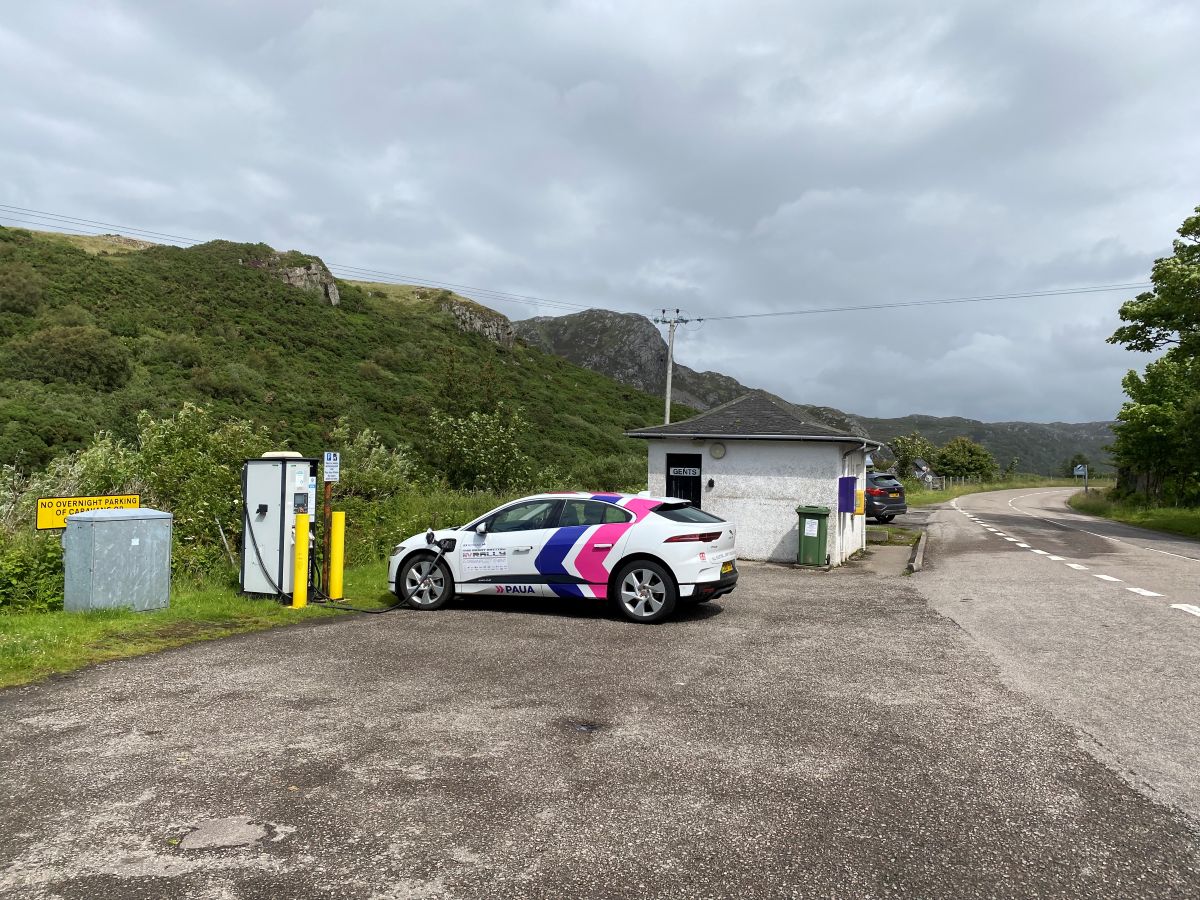
Paua has been working with ChargePlace Scotland since at least 2022, when CPS publicly announced a partnership with Paua to provide a roaming solution. It was initially linked to the Great British EV Rally and positioned as a first step towards a longer-term relationship.
That partnership was framed around helping business drivers access Scottish charging coverage using a single solution. Paua was the first and longest connected partner to ChargePlace Scotland.
What changes for Paua customers as CPS chargepoints move?
The physical chargers do not vanish, but the operator layer changes.
As those chargepoints move to new providers, the key question becomes:
Does the new operator support roaming in a way that keeps fleets moving?
Some regions are explicitly offering roaming access routes alongside app, contactless and RFID. That is a positive signal for interoperability and driver convenience.
Paua’s job is to keep your fleet experience stable while the underlying operator landscape evolves.
The bigger picture: Scotland is becoming more commercial and more competitive
The CPS transition is part of a wider shift:
- local authorities and chargepoint owners partnering with private operators
- longer-term operating contracts
- more expansion plans for the next phase of charging roll-out
This is positive for investment and scale.
The trade-off is fragmentation. That is why roaming and aggregation are becoming critical infrastructure, not just a convenience feature. Paua keeps businesses running during this change.
What should Scottish fleets and businesses do now?
If you manage fleet drivers in Scotland, the pragmatic approach is:
- assume operator changes will continue through 2025 and 2026
- reduce reliance on any single network app
- standardise on a single EV charging payment method that works across networks
- make sure drivers have a consistent way to charge, even when signage and apps change
That is exactly the gap Paua fills.
Paua is the EV charging payment platform for business. Paua is a business EV charging payment platform that enables fleets to manage public, home and workplace charging in one system.