TL;DR
Ensuring HMRC compliance in EV charging reimbursement requires accurate mileage tracking, real-time charging data collection, and a system that accounts for variable energy costs. Paua Reimburse simplifies this by automating tracking and documentation, enabling UK businesses to reimburse fairly and stay audit-ready.
How to Make HMRC-Compliant EV Charging Reimbursements for Your Employees
As more businesses in the UK transition to electric vehicles (EVs) for their fleets, one key consideration is how to ensure that reimbursement for home, public, and workplace charging aligns with HMRC requirements. Failing to follow the correct procedures could lead to costly audits, fines, or even legal repercussions.
In this practical guide, we’ll walk you through the steps your business needs to take to ensure that EV charging reimbursements are HMRC-compliant, and how Paua Reimburse can simplify the process, providing flexibility and accuracy.
Why HMRC Compliance Matters for EV Reimbursement
HMRC regulations require UK businesses to report employee reimbursements accurately. If these payments are not properly documented, they can be considered taxable income. This adds another layer of complexity for companies using EVs, as charging costs vary across locations and tariffs, and it’s harder to track compared to traditional fuel receipts.
To avoid penalties, businesses need a clear, HMRC-compliant system that can accurately track and record charging expenses for work-related travel. This means going beyond flat-rate payments like the Advisory Electricity Rate (AER) and ensuring you have the right data to justify every reimbursement.
Common Compliance Pitfalls:
- Inaccurate tracking of business and private mileage.
- Failure to separate charging costs by location (home, public, workplace).
- Over-reliance on AER, leading to incorrect reimbursements.
- Inadequate documentation or lack of audit trails for expenses.
Step-by-Step Guide to HMRC-Compliant EV Reimbursements
To ensure your business remains compliant, follow these key steps when reimbursing EV drivers:
1. Accurately Track Business Mileage
The first step in ensuring compliance is accurately tracking the number of miles driven for business purposes. While this might seem straightforward for petrol or diesel vehicles, EV drivers need additional tools to differentiate between private and business travel, especially when charging at home.
Solution: Automated Mileage Tracking
Paua Reimburse integrates with mileage tracking tools that log every journey and automatically differentiate between business and private miles. This data is critical for ensuring that reimbursements are based on work-related travel only, which HMRC requires.
2. Collect Charging Data from All Sources
EV drivers use a mix of home, public, and workplace chargers, all of which come with different costs. To meet HMRC’s standards, your business must gather charging data from all locations and apply the appropriate reimbursement rates. Over-relying on estimates or flat rates can lead to compliance issues, as employees may be over- or under-compensated.
Solution: Paua Reimburse’s Flexible Data Capture
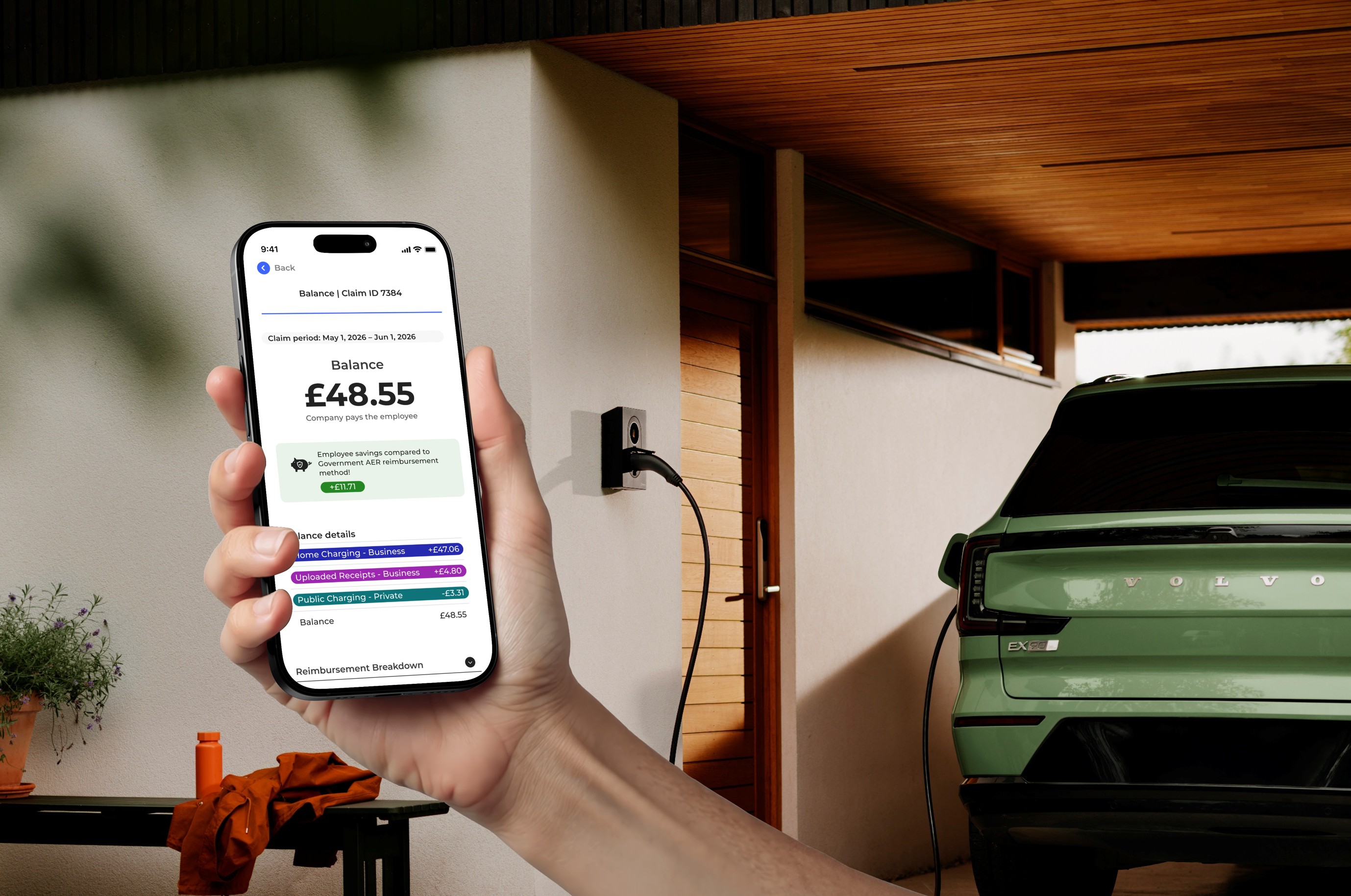
Paua Reimburse captures real-time charging data across multiple locations, ensuring that businesses have full visibility into when and where employees charge their EVs. Whether drivers use a home charger on an off-peak tariff or a public fast charger, Paua Reimburse provides accurate records to support each reimbursement.
3. Implement an HMRC-Approved Reimbursement System
In the absence of a dedicated reimbursement process, businesses often rely on the AER, a flat rate currently set at 10p per mile. However, this rate doesn’t take into account the variability in energy costs across different charging locations, making it unsuitable for many use cases. HMRC-compliant systems need to reflect the real costs incurred by drivers.
Solution: Dynamic Reimbursement with Paua Reimburse
Paua Reimburse calculates reimbursements based on real energy usage, considering factors like time of day, location, and tariff. This ensures that businesses aren’t overpaying or underpaying their drivers, while staying fully compliant with HMRC guidelines. By providing detailed charging reports, the system can justify all payments made to employees.
4. Maintain Clear Records and Documentation
To meet HMRC compliance, businesses must keep accurate and auditable records of all reimbursements made to employees. These records must include details of business mileage, energy consumption, and charging locations. Inadequate documentation can result in fines or penalties, especially during an audit.
Solution: Full Transparency with Paua Reimburse
Paua Reimburse generates detailed reports that include all the necessary data for HMRC compliance. These reports can be used to substantiate reimbursements, providing a clear audit trail. The system automatically logs business mileage, charging data, and energy usage, so businesses have the documentation they need at their fingertips.
5. Ensure Fair and Consistent Reimbursements
Maintaining consistency in how you reimburse employees is key to compliance. Variations in reimbursement methods or favouring certain charging locations over others can create discrepancies, which may lead to compliance risks. A robust system ensures that all employees are fairly compensated for their business travel, no matter where or how they charge their EVs.
Solution: Uniform Reimbursement Process
With Paua Reimburse, businesses can ensure fair compensation for all drivers, as the system applies consistent and HMRC-compliant methods for all charging sessions. This helps maintain trust among employees while keeping your business safe from compliance pitfalls.
The Benefits of Using Paua Reimburse for HMRC Compliance
Adopting Paua Reimburse as part of your EV mileage reimbursement process offers several advantages:
- Accurate mileage tracking: Ensures that only business-related travel is reimbursed.
- Real-time charging data: Captures charging sessions from home, public, and workplace locations.
- Dynamic reimbursement: Adjusts for variable energy tariffs to ensure fair compensation.
- Comprehensive reports: Provides the detailed records needed for HMRC compliance.
- Streamlined administration: Reduces the burden on fleet managers and finance teams by automating key parts of the reimbursement process.
Simplify Your EV Reimbursement Process Today
With Paua Reimburse, UK businesses can ensure their EV mileage reimbursements are HMRC-compliant, fair, and efficient. The platform simplifies complex processes by providing a flexible solution that tracks mileage, captures charging data, and calculates dynamic reimbursements—all while ensuring transparency and accuracy.
Ready to make your EV reimbursement HMRC-compliant? Contact Paua to learn more about how Paua Reimburse can help your business stay compliant and fairly compensate your drivers.
Paua is a business EV charging payment platform that enables fleets to manage public, home and workplace charging in one system.