

TL;DR
Yes, home EV charging used for business travel is a business expense. The real challenge is measuring it accurately and reimbursing it fairly, in a way finance teams are confident will stand up to HMRC scrutiny.
Is home EV charging a business expense?
Short answer: yes, the business element of home EV charging is a business expense.
Longer answer: it depends how you calculate it, how you reimburse it and how confident you want your finance team to feel when HMRC comes knocking.
As more company vehicles are charged at home, this question is moving from theoretical to operational very quickly.
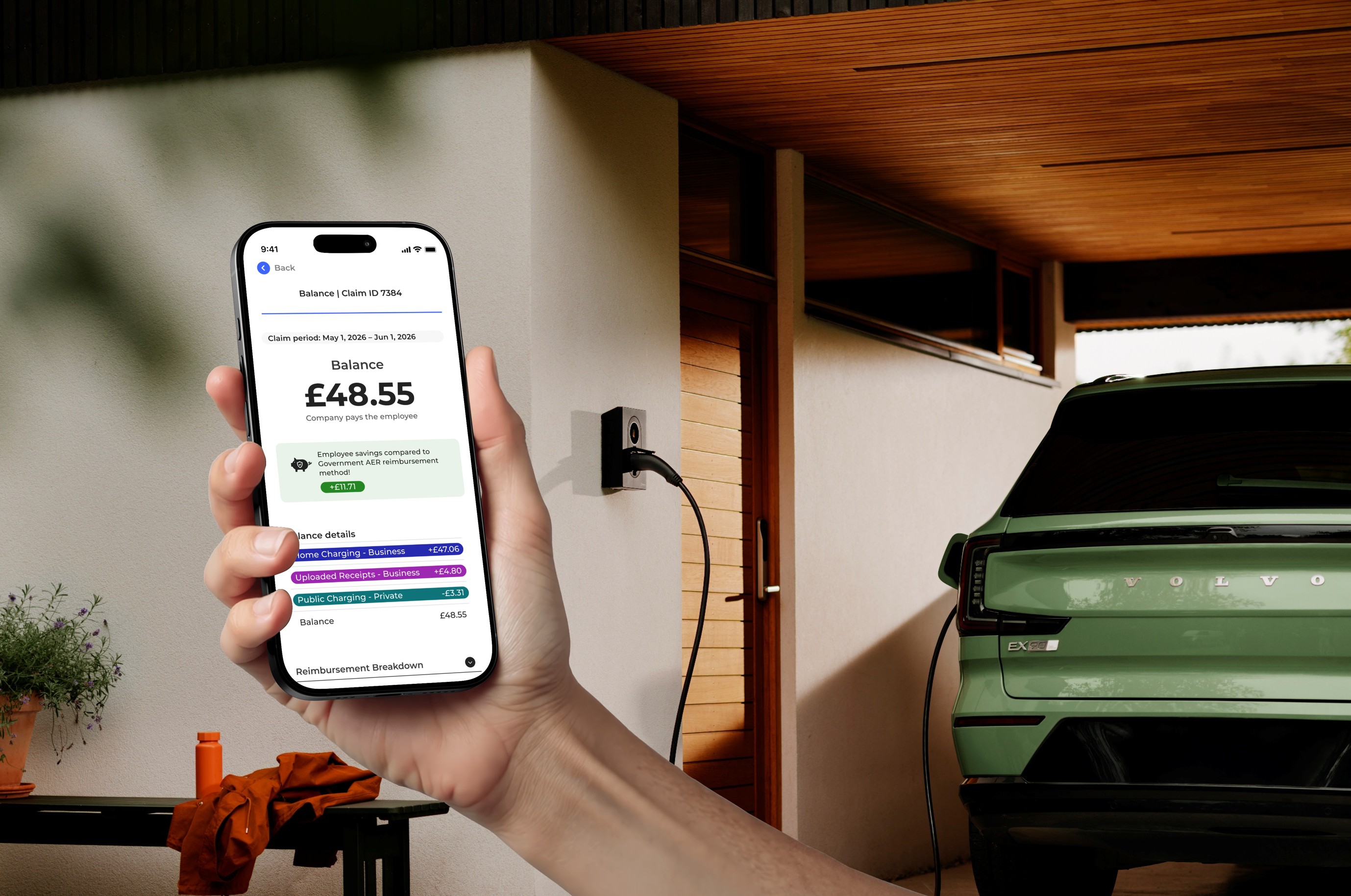
In this blog we dive into how Paua Reimburse supports businesses with home charging reimbursement.
This content is provided for general information only and does not constitute tax, legal or accounting advice. You should seek independent advice based on your specific circumstances.

Why this question matters
For years, fleets have had a clear mental model:
- Fuel is a business expense
- Fuel cards handle the payment
- Mileage rates mop up the rest
Home EV charging breaks that model.
The energy that powers a company vehicle is no longer bought by the business directly. It is bought by the employee, on their personal energy bill, using domestic electricity.
That shift creates uncertainty for:
- Finance teams
- Payroll
- Tax and compliance
- Drivers
And uncertainty is rarely welcome.
The principle: business use equals business expense
The underlying principle is simple and unchanged.
If energy is used for business travel, it is a business expense.
This is no different to:
- Petrol used for work journeys
- Diesel used in a company van
- Electricity used to power depot chargers
The complication is not whether it is an expense.
The complication is how you measure it and how you pay it back.
Why home charging feels different to finance teams
Home EV charging feels unfamiliar for a few reasons.
The business does not receive the bill
The electricity bill is addressed to the employee, not the company. This makes the cost feel personal, even when the usage is business related.
Energy pricing is variable
Unlike fuel, electricity pricing:
- Varies by supplier
- Varies by tariff
- Varies by time of day
This makes simple averages less reliable.
Vehicles are used for mixed purposes
Most company vehicles are used for both business and personal journeys, which requires apportionment.
These factors make finance teams cautious, even when the principle itself is clear.
What HMRC allows
HMRC recognises that electric vehicles create new challenges and allows several approaches to reimbursement.
Common methods include:
- Advisory Electric Rates
- Mileage based reimbursement
- Reimbursement of actual electricity costs where supported by data
Each approach has different implications for:
- Accuracy
- Fairness
- Administrative effort
- Driver satisfaction
Importantly, HMRC compliance does not automatically mean the driver is fairly reimbursed. This is a critical distinction that many fleets overlook.
Advisory Electric Rates and business expenses
The Advisory Electric Rate is designed as a simple, administratively light option.
It allows businesses to reimburse drivers for business mileage without tracking actual electricity usage.
From a compliance perspective, this is helpful.
From an accuracy perspective, it can be blunt.
When real energy prices rise or tariffs vary significantly, the rate may under compensate drivers, even though the reimbursement remains compliant.
This is often where finance teams and drivers quietly diverge in their understanding of “fair”.
Actual cost reimbursement
Reimbursing actual energy costs aligns more closely with traditional expense logic.
The business pays:
- The real cost of energy
- Used for business purposes
- Based on verifiable data
This approach:
- Treats home charging like any other business expense
- Improves fairness for drivers
- Reduces disputes
However, it requires better data and stronger processes, which is why many fleets struggle to implement it manually.
This approach often starts to fail when drivers use vehicles for both personal and business use as there needs to be additional data tracking the vehicles use.
What about tax and payroll?
Whether home EV charging reimbursement is taxable depends on:
- The method used
- The accuracy of the calculation
- The supporting records
Poorly documented reimbursements increase the risk of:
- Taxable benefits
- P11D exposure
- Payroll complications
This is one reason finance teams often default to simple rates, even when they know the outcome is imperfect.
Why ignoring the issue is risky
Some fleets avoid the question altogether, hoping it will resolve itself.
In practice, this leads to:
- Drivers paying out of pocket
- Inconsistent ad hoc payments
- Loss of trust
- Growing admin burden
From a finance perspective, this is the worst of all worlds. There is cost, but no control.
The link between fairness and compliance
A key insight for fleets is this:
- Compliance answers the question “is this allowed?”
- Fairness answers the question “does this feel right?”
Home EV charging sits at the intersection of both.
Fleets that address only compliance often find themselves revisiting the issue later due to driver dissatisfaction or scaling challenges.
How fleets are approaching this now
Leading fleets are reframing the question.
Instead of asking:
“Is this allowed?”
They ask:
“How do we treat home charging like any other business expense, without creating admin chaos?”
This is driving a move towards:
- Energy based reimbursement (ideal for business use only drivers)
- Better data capture (a range of data points supports the reimbursement audit)
- Clearer policies
- Automation where scale demands it
Where Paua fits
Paua Reimburse is built around the idea that home EV charging is a business expense and should be treated as one.
It helps fleets:
- Calculate the real cost of home charging
- Attribute energy to business use
- Support different tariffs and driver types
- Maintain clear records for finance and tax teams
The goal is not complexity for its own sake, but confidence. Confidence that drivers are paid fairly and finance teams can stand behind the numbers.
The takeaway
So, is home EV charging a business expense?
- Yes, when the energy is used for business travel
- The challenge is measurement, not principle
- HMRC compliance is necessary, but not sufficient
- Have data ready to support your approach if challenged
- Fair, accurate reimbursement matters as fleets scale
As electric vehicles become standard, this question stops being theoretical. Getting it right early saves time, money and friction later.
Paua is the EV charging payment platform for business. Paua Reimburse exists to solve this.
This content is provided for general information only and does not constitute tax, legal or accounting advice. You should seek independent advice based on your specific circumstances.
Paua is a business EV charging payment platform that enables fleets to manage public, home and workplace charging in one system. Paua.com
Read more about Paua Reimburse here.




.jpg)
