TL;DR
Paua Solo lets employees pay for public EV charging from gross salary, cutting costs by up to 62%. It’s simple, compliant, and works anywhere you already charge.
How to Save Up to 62% on Public EV Charging Through Salary Sacrifice
A simple guide to turning your tax rate into real EV charging savings
If you’ve joined, or are thinking about joining, an EV salary sacrifice scheme, you already know it’s one of the smartest ways to drive electric. You get a brand-new car, lower emissions and big tax savings.
But did you know you can save even more on your public EV charging, up to 62% less than you’d pay from your take-home pay?
Remember to ask your scheme provider if they provide this service during sign up. Paua can help!
Here’s how it works, and how Paua Solo makes it effortless.

1. The short version: salary sacrifice in a nutshell
Salary sacrifice is a government-approved way to buy or lease certain benefits, like an electric car, using your gross salary instead of your net pay.
You agree to “sacrifice” part of your salary in exchange for a benefit. Because that amount is taken before tax and National Insurance are applied, you pay less overall.
In practice, that means:
- You pay less income tax.
- You pay less National Insurance.
- Your employer also saves on employer NI (15%).
The combined saving is what makes salary sacrifice such a powerful way to save money on EV driving.
2. Why public charging is the missing piece
Most EV salary sacrifice schemes already include the car lease and sometimes home charging equipment. But public charging has been left out, especially for people who can’t charge at home.
That means millions of employees are still paying full, post-tax prices for public charging sessions, often 50p–70p per kWh, even though they could be saving through salary sacrifice.
That’s where Paua Solo comes in.
3. Introducing Paua Solo: public charging made tax-efficient
Paua Solo lets employees use part of their gross salary to fund public EV charging - just like the car lease itself.
Here’s how it works:
- You add a Paua EV charge card when choosing your salary sacrifice car.
- You select a fixed monthly allowance, usually £25, £50, £75 or £100
- That amount is deducted from your gross salary (before tax).
- Paua loads your allowance onto your card each month.
- You charge at over 65,000 public connectors (August 2025) across 50+ UK networks
The result?
You’re effectively using pre-tax income to pay for your energy, and saving up to 62% on public charging costs.
4. How the 62% saving works
Let’s break down the maths.
Example 1: Higher-rate taxpayer (42% effective saving)
- Tax rate: 40%
- NI rate: 2%
- Total saving: 42%
If you sacrifice £100 from your gross salary for public charging:
- You only lose £58 of your take-home pay.
- You still get £100 of charging credit.
That’s a 42% saving straight away.
Example 2: Basic-rate taxpayer (28% effective saving)
- Tax rate: 20%
- NI rate: 8%
- Total saving: 28%
If you sacrifice £100 from gross salary:
- You only lose £72 in take-home pay.
- You still get £100 of charging credit.
That’s a 28% saving, before you’ve even plugged in.
Example 3: The highest earners (up to 62%)
Those on the highest salaries start to hit the highest savings rates with 62% achievable (and even more in Scotland)
Example 4: Combined employer & employee impact (up to 60%)
When you include the impact of those on £100,000+ salaries, the overall scheme efficiency can reach up to 62% (when adding Scotland specific tax rates).
That’s why Paua Solo is described as “the salary sacrifice tax advantage for public charging.”
5. Why gross pay matters
It all comes down to when you pay.
- Gross pay (pre-tax): You get the tax advantage.
- Net pay (post-tax): You don’t.
If you’re paying for public charging from your debit card or through an after-the-fact reimbursement system, you’re using taxed income - and missing out on savings.
Paua Solo moves your charging costs into the salary sacrifice structure, so your payments are pre-tax and compliant.
Simple, legal, and incredibly efficient.
6. A quick comparison

Why choose complexity when you can choose clarity?
7. What drivers love about Paua Solo
Aside from the savings, Paua Solo makes public charging feel effortless.
One card. One app. One network.
- Works on over 50 UK charging networks.
- No need for multiple accounts or subscriptions.
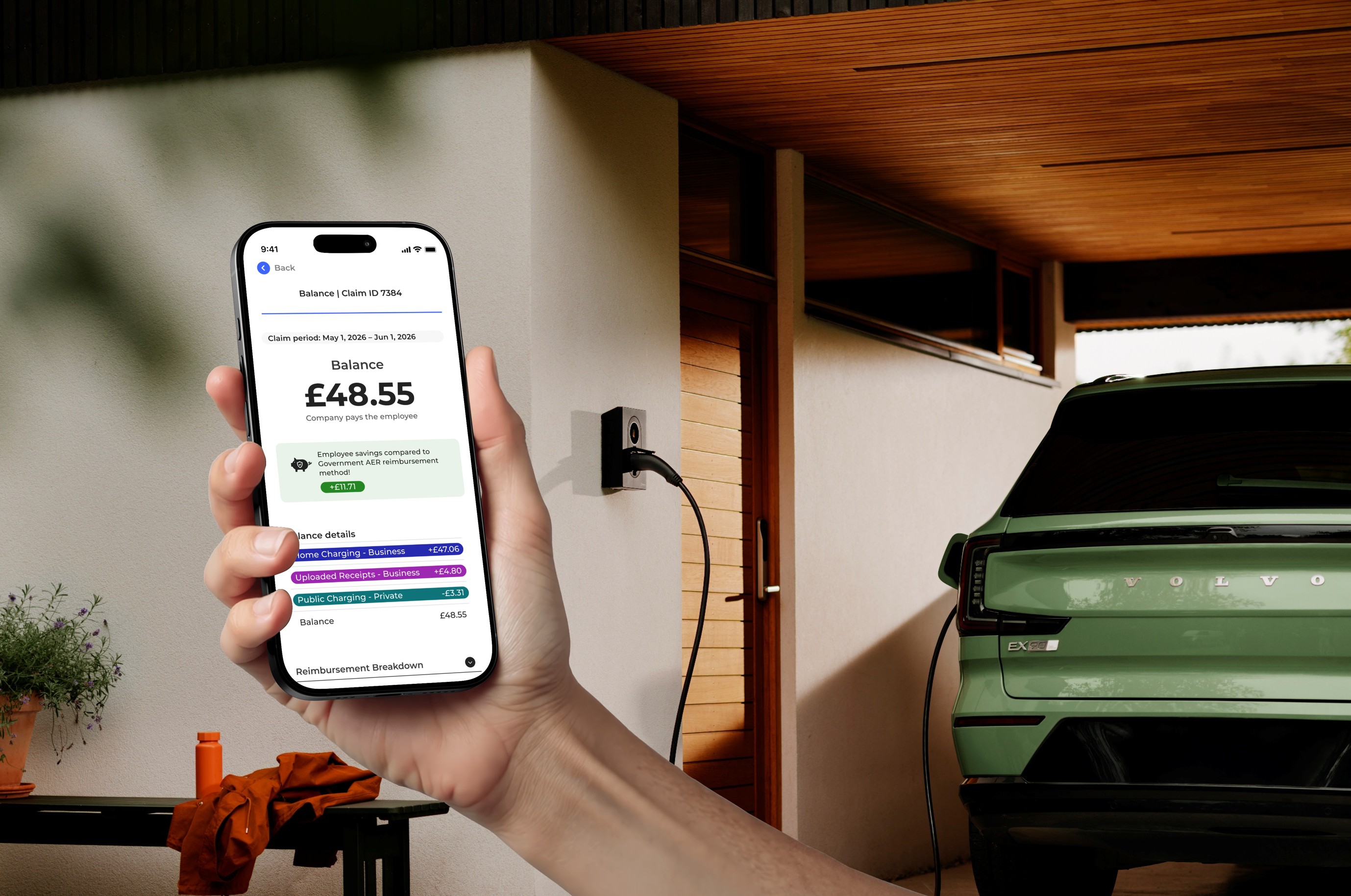
- Real-time balance tracking via the Paua app.
- Automatic top-ups each month.
You’ll never have to file an expense claim or wait to be reimbursed again.
8. What happens if you don’t use your full allowance?
No problem, your unused balance rolls over to the next month automatically.
If you go over your allowance, the extra spend is billed directly to your linked debit card.
You’re always in control, no penalties, no forfeits, just flexible, fair charging.
9. How to get started
If your employer already offers Paua Solo through its salary sacrifice scheme, you can sign up in minutes.
Here’s how the process works:
- Choose your EV through your salary sacrifice platform.
- Select Paua Solo as an add-on benefit.
- Pick your monthly allowance (e.g. £50).
- Paua sets up your card and account.
- Start charging on the UK’s largest aggregated public charging network.
If your employer doesn’t yet offer it, ask your HR or fleet manager to contact Paua - it’s an easy plug-in for existing schemes.
10. What makes Paua Solo different from other solutions?
Many “EV charging” benefits operate on a post-pay or reimbursement model, where you charge first and the deduction happens later.
That approach creates:
- Inconsistent payroll deductions.
- Grey areas for HMRC compliance.
- Extra admin for finance teams.
Paua Solo uses a pre-tax, fixed-allowance model, making it:
- HMRC-aligned.
- Payroll-friendly.
- Audit-ready.
You get guaranteed tax savings and full peace of mind.
11. How much could you save?
Here’s a quick guide to typical Paua Solo savings for employees:

That’s real money back in your pocket every month - and hundreds of pounds over a year.
12. Why it’s good for your employer too
Paua Solo isn’t just a win for employees. Employers benefit too:
- 15% employer NI saving on every pound sacrificed.
- Simpler payroll with fixed deductions.
- One monthly invoice instead of hundreds of receipts.
- Better employee engagement through fairness and inclusion.
Some employers also recover VAT leaving them in a net positive position
When everyone wins, the policy scales naturally.
13. Sustainability that works for everyone
Every employee who switches to an electric vehicle reduces carbon emissions and local air pollution.
By making charging cheaper and simpler, Paua Solo helps more employees make the switch, and keeps your organisation’s sustainability goals on track.
That’s carbon reduction, cost reduction, and fairness, all in one.
14. Ready to plug in?
Saving up to 62% on public EV charging isn’t complicated. It’s simply about paying from the right part of your payslip.
With Paua Solo, your EV benefit becomes complete, car, charging and compliance all working together.
You save money.
Your employer saves time.
The planet saves carbon.
That’s what we call a smart charge.
Paua Solo, Public charging made simple, fair, and tax-efficient.
Paua Solo is the EV charge card solution for public charging in your salary sacrifice scheme. Contact Paua to learn how EV drivers can save up to 62% on public EV charging through salary sacrifice. Get cheaper, tax-efficient EV charging with Paua.
*This content is for general information only and does not constitute tax advice.
Paua is a business EV charging payment platform that enables fleets to manage public, home and workplace charging in one system.
Read more about Paua Salary Sacrifice here.