TL;DR
Paua Solo lets employees pay for public EV charging from gross salary, cutting costs by up to 62%. It’s simple, compliant, and works anywhere you already charge.
From Paperwork to Plug-In: How Employers Can Streamline EV Charging Benefits
The simple, scalable way to bring public charging into your salary sacrifice scheme
The dream of salary sacrifice electric vehicles has come true for thousands of UK employees. Affordable, tax-efficient, planet-friendly cars - what’s not to love?
For HR and fleet teams, however, the dream sometimes comes wrapped in a mountain of admin. Home charger reimbursements, energy claims, VAT queries and public-charging receipts can turn a green initiative into a paperwork marathon.
That’s exactly why Paua created Paua Solo - to turn EV charging into a seamless, low-admin benefit that scales easily from pilot to company-wide rollout.
If you’re wondering how to actually make it work, here’s the step-by-step guide - from concept to charging.

1. Start with the why: make it part of your EV strategy
Before the paperwork, start with the principle.
Adding Paua Solo to your salary sacrifice scheme isn’t just about convenience; it’s about completeness.
It ensures:
- Employees without home chargers can participate.
- Charging costs are tax-efficient (pre-tax, not post-pay).
- Payroll and VAT processes remain compliant and auditable.
By defining this purpose early - fairness, simplicity, and sustainability - your rollout gains instant clarity and stakeholder buy-in.
2. Step 1: Choose your implementation model
Paua offers three integration paths depending on your size, systems and speed:
Option A: Manual Upload - Fastest Start
Perfect for small-to-mid-size employers or pilot projects.
- HR sends a simple spreadsheet with employee names, emails, allowance levels, and start dates.
- Paua issues charge cards and activates accounts.
- Monthly usage and billing reports are shared via dashboard and email.
Time to go live: typically under two weeks.
Option B: API Integration - Full Automation
Ideal for larger organisations or salary sacrifice providers with digital platforms.
- Paua’s secure API connects directly to your system.
- Driver data and allowances sync automatically.
- Invoices and reports flow back for payroll and accounting.
Time to go live: 3–4 weeks with light IT input.
Option C: White-Label Partnership - Branded Experience
For enterprise-level partners or leasing providers who want full branding control.
- Paua provides the tech backbone; you own the customer interface.
- You keep the visual experience consistent with your platform.
- Paua manages charging data, payment flows and compliance behind the scenes.
Time to go live: typically 4–6 weeks.
3. Step 2: Define the charging allowances
Each employee selects a fixed monthly allowance - usually £25, £50, £75 or £100
This is the magic moment where simplicity meets compliance.
- The allowance is agreed upfront as part of their salary sacrifice contract.
- It’s deducted from gross pay before tax and NI.
- Paua applies that same value to the employee’s charge card each month.
Payroll sees a fixed, predictable number. Drivers see seamless access to charging on 69,000+ connectors across 50+ UK networks
Everyone wins.
4. Step 3: Payroll alignment
For payroll teams, Paua Solo fits neatly into existing processes:
- Add the allowance as a salary sacrifice deduction alongside the car lease.
- The total deduction matches Paua’s monthly invoice exactly.
- Paua’s service fee (15%) and VAT (20%) are itemised for easy accounting
There are no variable calculations, no manual reconciliations, and no reimbursements.
Payroll stays predictable and auditors stay happy.
5. Step 4: Communications and employee onboarding
Clarity drives adoption. When employees understand the benefit, they’re far more likely to use it.
Paua provides co-branded materials to help HR launch smoothly:
- Employee FAQ sheets explaining how salary sacrifice charging works.
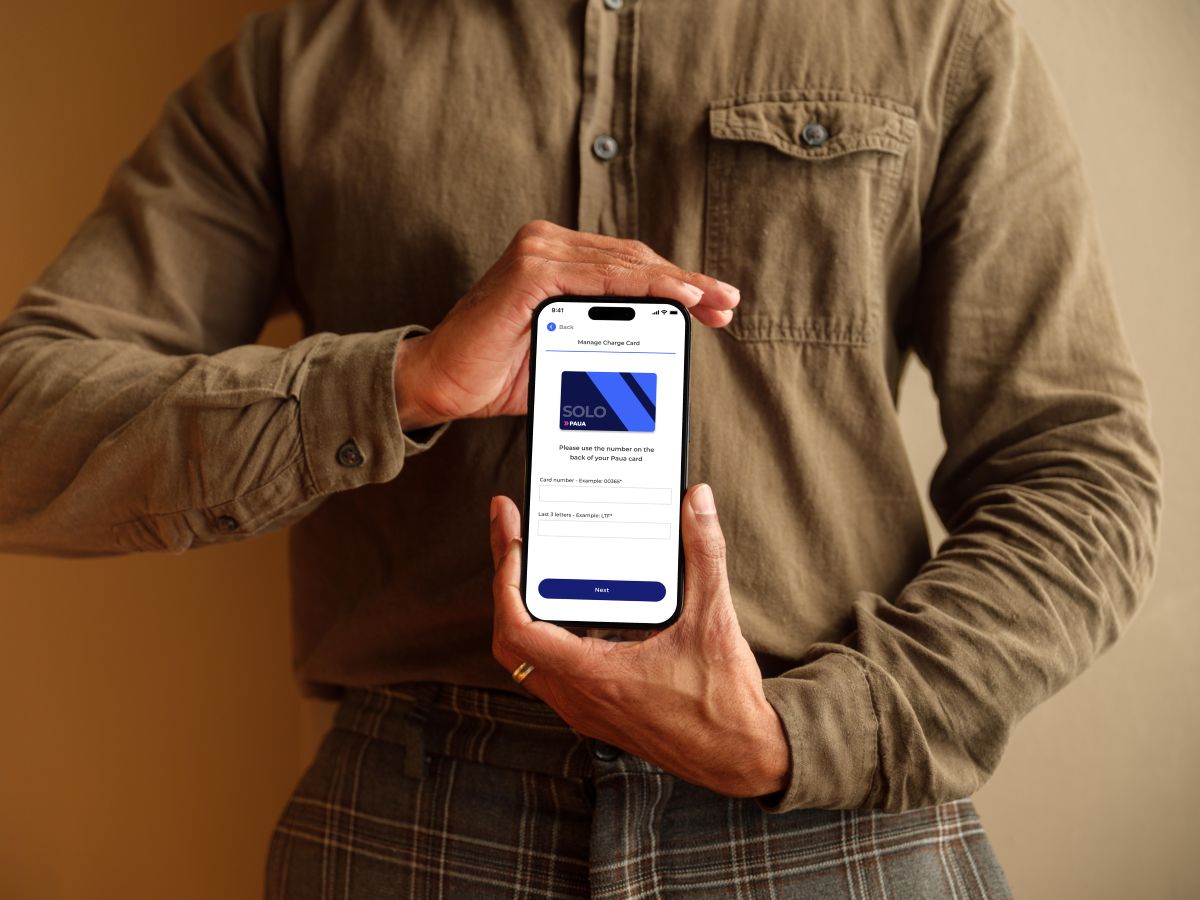
- Step-by-step guides for activating charge cards and apps.
- Launch emails you can send via internal comms or benefits portals.
Your message is simple:
“Add a Paua card to your EV package, pay through your gross salary, and save up to 62% on public charging.”
It’s clear, credible and instantly engaging.
6. Step 5: Issue cards and go live
Once employees are registered, Paua issues their charge cards and app credentials.
From that point:
- Charging allowances auto-load monthly.
- Unused balances roll over.
- Any overuse is billed directly to the employee’s debit card (outside the tax scheme).
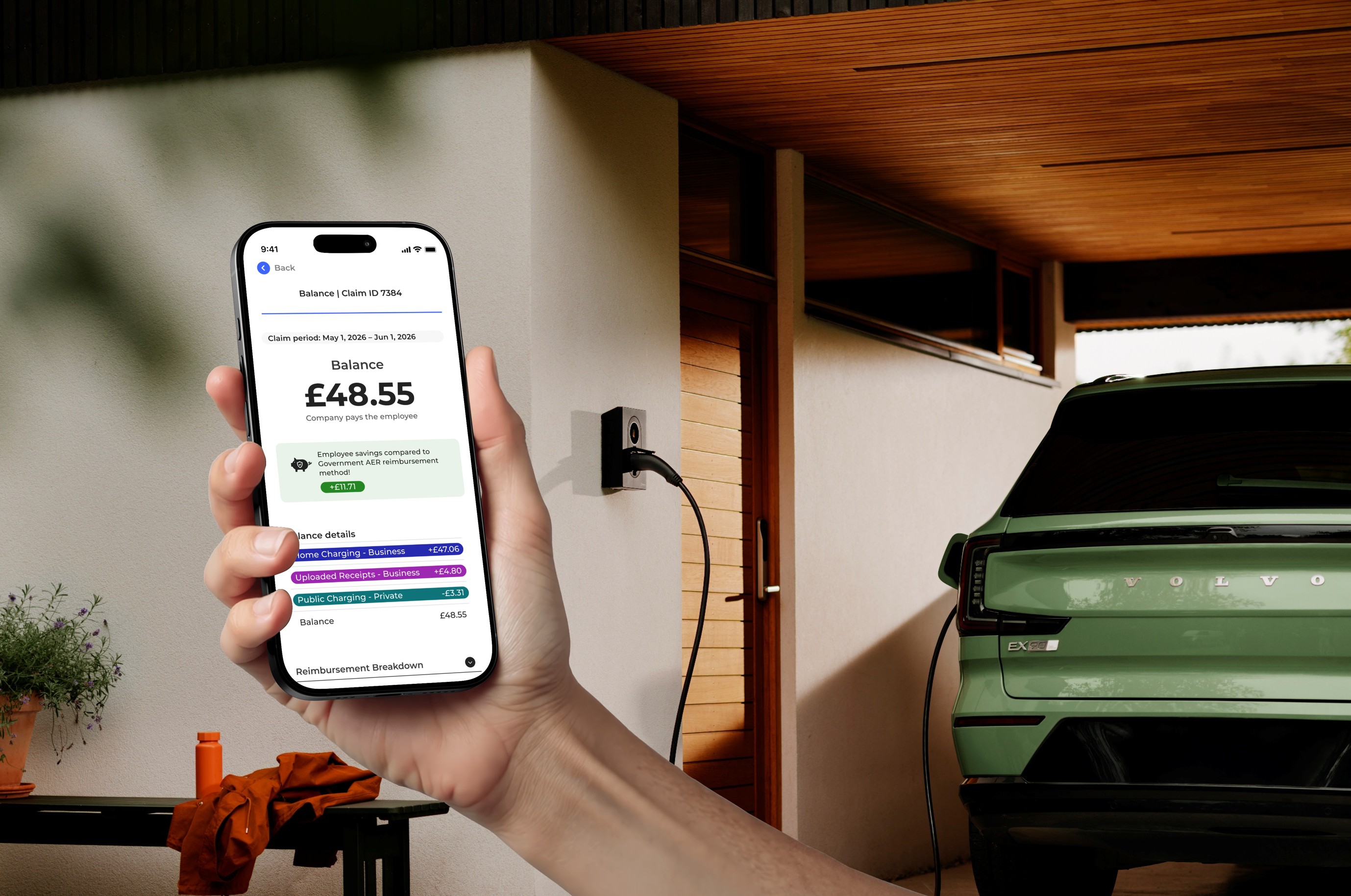
No expense claims. No waiting for reimbursements. Just tap, charge, and go.
Most employers see first charging sessions within 48 hours of card issue.
7. Step 6: Monitor and report
Paua’s dashboard gives HR, fleet and sustainability teams real-time visibility:
- Who’s charging and where.
- Total spend per employee or cost centre.
- VAT and NI savings.
- Estimated CO₂ reduction for ESG reporting.
Reports can be downloaded monthly or automated via API.
It’s the kind of transparency that makes finance directors smile - and sustainability officers cheer.
8. Step 7: Review and expand
Once your pilot or first phase is running smoothly, expansion is simple.
Most employers start with a few dozen early adopters, then scale across the workforce once they see the impact:
- Higher EV uptake (often +40%).
- Improved satisfaction with benefits fairness.
- Reduced payroll admin through automation.
With no new systems to buy and minimal HR overhead, growth is effortless.
9. Common implementation questions
Q: Does this add work for payroll?
A: No. Paua Solo uses fixed, predictable deductions and matching invoices - it actually reduces work.
Q: Can we change allowance levels later?
A: Yes, at renewal or contract variation points. Paua can update new amounts automatically.
Q: What if an employee leaves?
A: Their card is cancelled, payroll stops the deduction, and any unused allowance lapses.
Q: Can we reclaim VAT?
A: Yes, where applicable. Paua provides itemised VAT data for easy reclaim.
Q: How long does setup take?
A: Typically 2–4 weeks from agreement to first live charging session.
10. Real-world rollout example
A mid-sized consultancy with 600 staff added Paua Solo to its EV salary sacrifice offer.
Week 1: Scoping and setup call with HR and payroll.
Week 2: Data upload and initial card orders.
Week 3: Internal comms launch with Paua FAQ sheet.
Week 4: Drivers charging live on the network.
Within 90 days:
- Anticipated EV scheme participation grows by 38% (mainly among renters and urban staff).
- Simple payroll processing with no manual steps
- Sustainability reporting gained real-time charging data.
What began as a small add-on became a cornerstone of their fair-mobility policy.
11. The hidden win: governance clarity
Because Paua Solo is designed around pre-tax, fixed-value deductions, it also simplifies compliance and audit.
- HMRC alignment is built in.
- Payroll records match supplier invoices exactly.
- VAT is cleanly accounted for.
That transparency turns what used to be a “risk” conversation with finance into a “let’s scale this” conversation with leadership.
12. The end result: less admin, more adoption
After setup, Paua Solo runs itself:
- HR no longer chase receipts.
- Payroll no longer juggle spreadsheets.
- Finance no longer guess VAT.
- Employees no longer overpay for public charging.
You’re left with an EV benefit that’s cleaner, fairer and fully future-proof.
13. From idea to impact
Rolling out Paua Solo isn’t an IT project, it’s a workflow improvement with purpose.
You’ll see the benefits across:
- HR; simpler comms, happier employees.
- Finance; predictable deductions and VAT clarity.
- Sustainability; broader participation and measurable emissions impact.
That’s what “from paperwork to plug-in” really means: taking an idea that once sounded complicated and making it effortless.
14. The final word
Public charging used to be the missing piece of the EV benefits puzzle. Now it’s the simplest part to add.
With Paua Solo, employers can offer a complete, inclusive, low-admin EV policy in a matter of weeks.
One spreadsheet. One setup call. One dashboard.
Then; you’re live.
Less paperwork. More plug-ins. A cleaner, fairer future for every driver.
That’s Paua Solo in action.
Paua is a business EV charging payment platform that enables fleets to manage public, home and workplace charging in one system. Paua.com
Find out how Paua's salary sacrifice solutions can benefit you.