
TL;DR
Electric truck charging is fundamentally different from car charging. Larger batteries, depot operations, route planning, driver regulations, and infrastructure constraints mean freight needs purpose-built charging networks, not adapted passenger EV infrastructure.
Why Truck Charging Is Different: The Real Challenges of Electric HGV Infrastructure
The transition to electric vehicles is well underway. Cars and vans are increasingly supported by a mature public charging network, growing driver familiarity, and improving battery technology.
But electric trucks are different.
Charging an electric HGV is not simply a larger version of charging a car. The operational realities, infrastructure demands, and economic pressures of commercial freight create an entirely different challenge.
For the UK to successfully decarbonise freight transport, the industry needs charging infrastructure purpose-built for trucks, not adapted from passenger vehicles.
At Paua, we believe understanding these differences is critical to building a charging network that actually works for fleets.
Trucks Consume Vastly More Energy
The first and most obvious difference is energy demand.
An electric car may have a battery between 40kWh and 100kWh. Electric trucks regularly exceed 300kWh and can be significantly larger still.
That changes everything.
A single electric HGV can consume the equivalent electricity of 10 to 20 electric cars. Charging multiple trucks simultaneously creates enormous power demand on local grid infrastructure.
This means truck charging sites often require:
- major grid upgrades
- high-voltage connections
- battery storage systems
- megawatt-capable charging hardware
- sophisticated energy management
Truck charging is not just about installing chargers. It is about building energy infrastructure.
Trucks Need Different Physical Infrastructure
Most public EV charging locations were designed for passenger cars.
That creates problems immediately for heavy goods vehicles.
Electric HGV infrastructure must accommodate:
- articulated lorries
- rigid trucks
- trailers
- long wheelbases
- high roof heights
- large turning circles
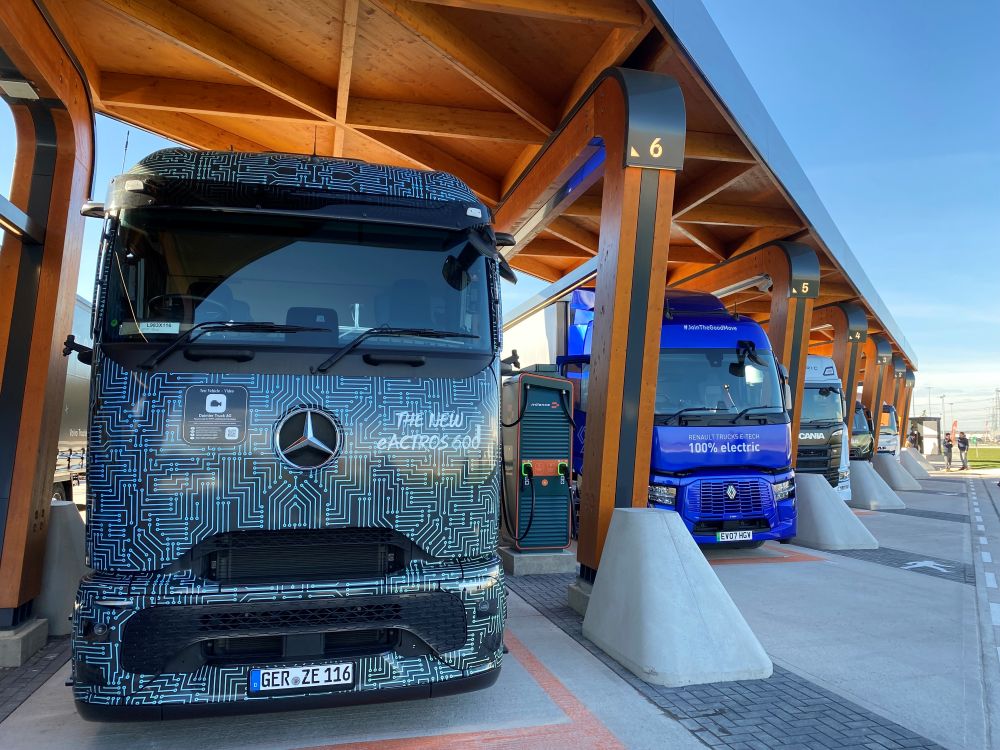
A truck cannot easily reverse into a tight charging bay beside parked cars. Many existing public charging locations are physically inaccessible to larger commercial vehicles.
Truck charging sites require:
- drive-through layouts
- wider lanes
- larger bays
- greater spacing between chargers
- safer separation from pedestrians and smaller vehicles
In other words, truck charging infrastructure needs to be designed around freight operations from day one.
Downtime Costs Fleets Real Money
Passenger vehicle drivers may tolerate inconvenience.
Commercial fleets cannot.
Every minute a truck is stationary unnecessarily costs money:
- delayed deliveries
- missed schedules
- driver downtime
- reduced vehicle utilisation
- operational disruption
Fleet operators work on extremely tight margins. Charging therefore has to integrate into operational workflows, not interrupt them.
This is one reason why truck charging is closely linked to:
- route planning
- dispatch systems
- driver break schedules
- loading and unloading windows
- depot operations
Unlike cars, truck charging is an operational logistics problem as much as an energy problem.
Reservations Become Essential
One of the biggest differences between passenger EV charging and truck charging is predictability.
In the passenger EV world, reservations are still relatively uncommon.
But trucks operate differently.
HGV drivers work to:
- delivery schedules
- legal driving hour regulations
- mandatory rest breaks
- customer time windows
A fleet cannot risk arriving at a charger only to discover it is occupied.
For trucks, charging reservations move from a “nice-to-have” feature to a core operational requirement.
This is likely to shape the future of truck charging networks:
- pre-booked charging slots
- integrated route planning
- fleet-specific access rules
- shared infrastructure scheduling
As electric freight scales, charging availability confidence will become just as important as charger availability itself.
Most Truck Charging Will Happen at Depots
Cars typically rely heavily on public charging and home charging.
Trucks are different because most commercial fleets operate from depots.
That makes depot charging the natural foundation of electric freight.
Depot charging offers:
- overnight dwell time
- operational control
- predictable charging windows
- lower charging costs
- improved fleet scheduling
However, depot infrastructure is expensive to build:
- grid upgrades
- charger installation
- civil engineering
- energy management systems
This is one reason shared depot models are gaining traction.
At Paua, we believe shared depots will play a major role in accelerating truck electrification by increasing infrastructure utilisation and improving access for fleets.
Public Truck Charging Is Still Early
The UK public truck charging landscape remains immature compared to passenger EV infrastructure.
While momentum is building, dedicated truck charging locations are still relatively scarce.
A growing ecosystem is emerging, including:
- Milence
- GRIDSERVE Electric Freightway
- Aegis Energy
- BP Pulse
- Leap24
- Pragma Charge
Many sites today remain:
- multi-use
- pilot projects
- depot-focused
- corridor-specific
The industry is still in the early infrastructure buildout phase.
Truck Charging Needs Better Data
Another major challenge is data quality. Location point of interest data.
Truck fleets need significantly more information than passenger EV drivers.
For example:
- can the truck physically access the site?
- is trailer charging possible?
- is there overnight parking?
- are there driver welfare facilities?
- is the site secure?
- can hazardous goods vehicles enter?
- what is the turning radius?
Without accurate infrastructure data, route planning becomes difficult and downtime risk increases.
Shared Depots Could Bridge the Gap
One of the biggest challenges facing electric freight is infrastructure rollout speed.
Building a nationwide dedicated truck charging network will take years.
Shared depots offer an important bridge solution.
Rather than every fleet building isolated infrastructure, fleets can securely share underutilised charging assets through trusted platforms.
This creates:
- more charging locations
- lower infrastructure costs
- higher charger utilisation
- faster network growth
- greater route flexibility
Paua Share is already enabling this model through a growing network of shared private charging infrastructure.
For many fleets, shared infrastructure may become the missing link between early electrification pilots and scalable electric freight operations.
The Future of Truck Charging
Truck charging is not simply “car charging but bigger”.
It is a fundamentally different operational ecosystem requiring:
- dedicated infrastructure
- higher power delivery
- reservation capability
- depot integration
- freight-specific layouts
- better infrastructure data
- secure access models
The freight industry will need collaboration across:
- fleets
- charging providers
- software platforms
- energy companies
- local authorities
- infrastructure developers
The good news is progress is accelerating.
As infrastructure expands and new models like shared depots mature, the foundations of a scalable electric freight network are beginning to emerge.
The challenge now is ensuring the infrastructure evolves around the realities of commercial transport, not around assumptions inherited from passenger EV charging.
Because trucks are different. Their charging infrastructure needs to be different too.
About Paua
Paua is a UK EV charging payment platform for fleets. We help businesses pay for electric vehicle charging across public networks, home charging and shared depots, giving fleet managers control over time, cost and data as they electrify.
Read more about Paua's truck charging here.



.jpg)
