

TL;DR
AER is a simple HMRC rate best suited to home charging scenarios, while actual cost reflects real energy use. Mixing use cases leads to inaccurate and unfair reimbursement.
HMRC EV reimbursement explained: AER vs actual cost
Short answer: AER is a simple, HMRC approved mileage rate, while actual cost reimbursement reflects the true price of electricity. One prioritises simplicity, the other accuracy.
Most fleets end up choosing between these two approaches. Understanding the difference, and when each applies, is critical to getting EV reimbursement right.
This article is intended to provide general information and context. It is not tax or legal advice and should not replace guidance from a qualified adviser.
What is the HMRC Advisory Electric Rate (AER)?
The Advisory Electric Rate is a mileage based rate set by HMRC.
It is designed to:
- Provide a simple way to reimburse EV drivers
- Avoid complex calculations
- Ensure a consistent, compliant approach
Fleets using AER:
- Pay a fixed amount per business mile
- Do not need to track actual electricity usage
It is a practical tool, not a precise one.
Understanding the two uses of AER
It is important to understand that AER is intended for specific use cases, and those use cases should not be mixed.
In practice, there are two distinct scenarios.
1. Drivers who cannot charge at home
These drivers rely primarily on:
- Public charging
- Workplace charging
In this scenario:
- Charging costs are typically higher and more variable
- The Advisory Electric Rate is less likely to reflect real spend
- Businesses often reimburse actual charging costs where data is available
2. Drivers who charge at home
These drivers:
- Charge primarily at home
- Benefit from lower domestic electricity rates
In this scenario:
- AER is intended to approximate the cost of home charging
- It provides a simple, standardised reimbursement method
Why these should not be mixed
Problems arise when fleets apply AER inconsistently across both groups.
For example:
- Applying a home charging based rate to drivers relying on public charging
- Assuming one flat rate fairly represents all charging behaviour
This leads to:
- Under reimbursement for some drivers
- Over reimbursement for others
- Perceived unfairness across the fleet
The key principle is:
Reimbursement approach should reflect how and where the vehicle is charged
What is actual cost reimbursement?
Actual cost reimbursement is based on:
The real cost of electricity used to charge the vehicle for business miles
This involves:
- Measuring energy used (kWh)
- Applying the driver’s electricity tariff
- Separating business and private miles
It aligns more closely with how businesses treat other expenses.
AER vs actual cost: the key differences
Simplicity vs accuracy
- AER
- Simple to apply
- Minimal data required
- Actual cost
- More complex
- Requires detailed data
Cost reflection
- AER
- Uses a standard rate
- Does not reflect individual tariffs or behaviour
- Actual cost
- Reflects real electricity pricing
- Accounts for tariff differences and charging patterns
Fairness for drivers
- AER
- May under compensate drivers
- Particularly those with higher energy costs
- Actual cost
- More likely to match true cost
- Fairer across different drivers
Administrative effort
- AER
- Low admin
- Easy to implement
- Actual cost
- Higher complexity
- Difficult to manage manually
Scalability
- AER
- Scales easily due to simplicity
- Actual cost
- Scales well with the right systems
- Challenging without automation
Why AER exists
HMRC introduced AER to solve a practical problem:
- Businesses needed a simple way to reimburse EV mileage
- Not all fleets had access to detailed energy data
- Administrative burden needed to stay low
AER provides a consistent baseline, not a perfect reflection of cost.
Where AER falls short
As EV adoption grows, limitations become more visible.
Energy prices vary significantly
Drivers may be on:
- Different tariffs
- Time of use pricing
- EV specific rates
A single rate cannot reflect this variation.
Charging behaviour differs
Drivers charging:
- Overnight may pay less
- During peak times may pay more
AER does not account for this.
Mixed charging environments
Fleets with both:
- Home charging drivers
- Public charging drivers
Will struggle if they apply a single rate across all scenarios.
When AER works well
AER is a good fit for:
- Drivers primarily charging at home
- Small fleets
- Early stage EV adoption
- Businesses prioritising simplicity
It provides:
- Compliance
- Ease of administration
When actual cost becomes more relevant
Actual cost reimbursement becomes more attractive when:
- Fleets scale
- Tariff variation increases
- Drivers rely on different charging environments
- Fairness becomes a concern
- Finance teams want better cost visibility
It provides:
- Accuracy
- Transparency
- Alignment with real costs
The trade off fleets must make
At its core, the decision is:
Do you prioritise simplicity or accuracy?
- AER simplifies the process
- Actual cost reflects reality
Many fleets start with AER and evolve towards actual cost as complexity increases.
Can fleets use both approaches?
Yes, but with care.
Fleets may:
- Use AER for home charging drivers, use the public AER for those without home chargers
The key is consistency within each group and avoiding blended logic.
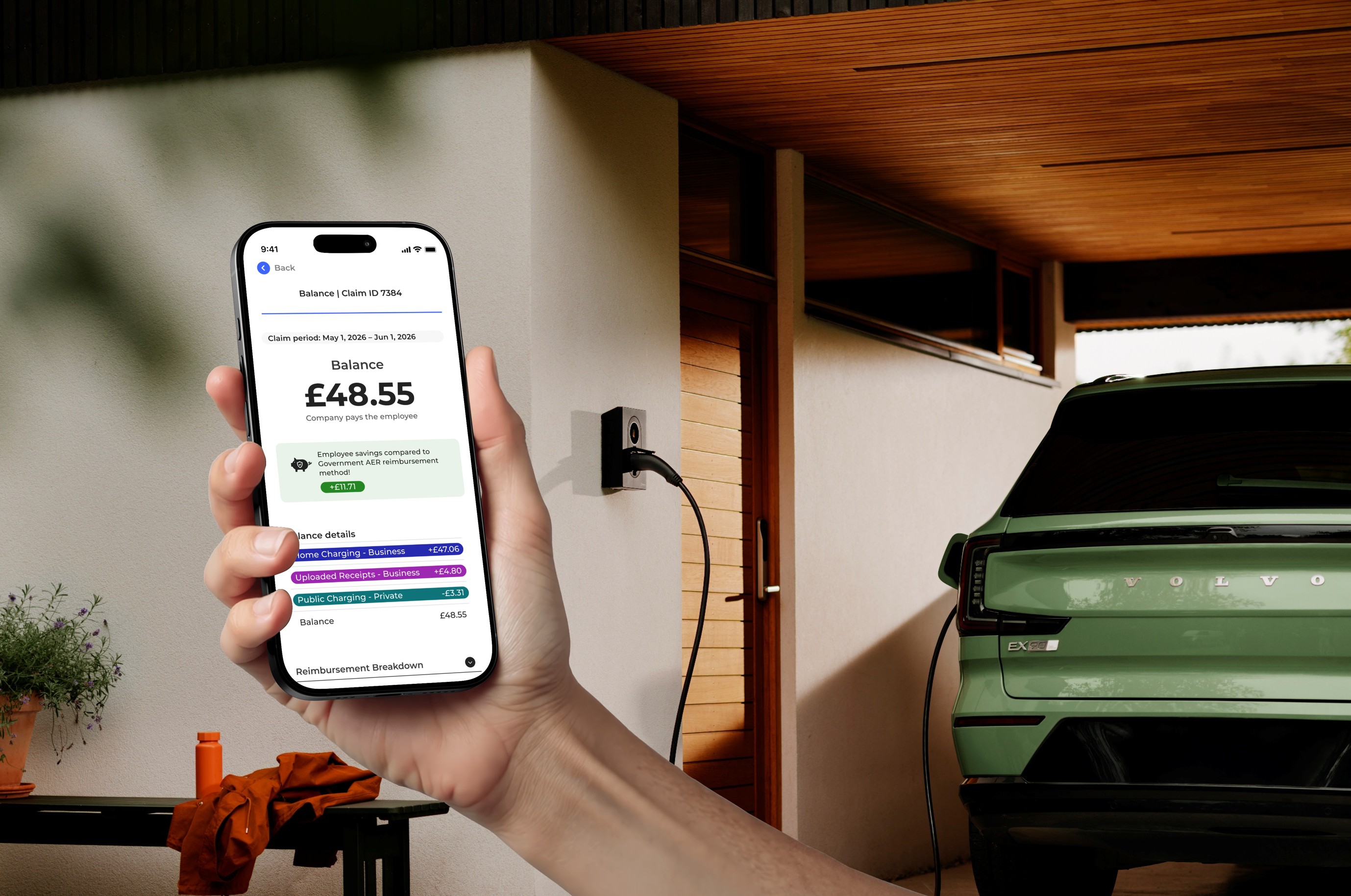
How Paua Reimburse bridges the gap
Paua Reimburse is designed to support fleets moving beyond flat rates.
It enables:
- Accurate calculation of real energy costs
- Support for different tariffs and charging patterns
- Separation of business and private miles
- Consistent, auditable processes
This allows fleets to maintain compliance while improving fairness and control.
The takeaway
AER and actual cost are both valid, but they serve different needs.
- AER is simple and works best for home charging scenarios
- Actual cost is accurate and reflects real energy use
- Mixing charging behaviours under one approach creates unfair outcomes
As fleets grow, the limitations of flat rates become more visible.
Important note
This article is intended to provide general information and context. It is not tax or legal advice and should not replace guidance from a qualified adviser.
About Paua
Paua is a UK EV charging payment platform for fleets. We help businesses pay for electric vehicle charging across public networks, home charging and shared depots, giving fleet managers control over time, cost and data as they electrify.
Read more about Paua Reimburse



.jpg)
