

TL;DR
EV home charging reimbursement is complex due to variable tariffs, mixed business and private miles and fragmented data. Simple methods work early but break at scale.
Why EV home charging reimbursement is harder than it looks
Short answer: because EV home charging combines variable energy costs, mixed vehicle use and fragmented data into one problem that fleets were never designed to manage.
On the surface, reimbursing electricity sounds simple. In reality, it introduces layers of complexity that only become visible as fleets scale.
Why it looks simple at first
Most fleets start with a straightforward assumption:
- Drivers charge at home
- They incur a cost
- The business pays them back
This mirrors how fuel reimbursement has worked for years.
So the initial thinking is:
- Use a flat rate
- Or estimate the cost
- Pay drivers monthly
At small scale, this works well enough.
Where complexity starts to appear
As soon as fleets grow, the edge cases start to emerge.
Energy prices are not fixed
Unlike fuel, electricity pricing is not standardised.
Drivers may be on:
- Different suppliers
- Different tariffs
- Different pricing structures
Some may pay:
- A flat rate all day
- Lower overnight rates
- Higher peak rates
This means:
the same vehicle can cost different amounts to charge depending on when and where it is charged
Charging behaviour varies
Not all drivers charge in the same way.
Some:
- Charge overnight
- Optimise for cheaper tariffs
Others:
- Top up during the day
- Charge irregularly
Without visibility into behaviour, fleets struggle to understand actual cost.
Vehicles are used for both business and private miles
This is a core complication.
Most drivers:
- Use their vehicle for work
- Use the same vehicle for private miles
This creates a requirement to:
- Separate business energy from private energy
- Avoid over or under reimbursement
This is rarely straightforward without reliable data.
Data is fragmented
Accurate reimbursement relies on multiple data points:
- Energy used
- Cost per kWh
- Time of charging
- Vehicle identity
- Business miles
In many fleets, this data sits across:
- Chargers
- Vehicles
- Expense systems
- Driver inputs
Bringing it together consistently is difficult.
Not all drivers are the same
Fleets are rarely uniform.
You may have:
- Drivers with home chargers
- Drivers without off street parking
- Drivers on complex tariffs
- Drivers with high business mileage
- Drivers with minimal business use
A one size approach often fails.
Why manual processes break down
At small scale, fleets often rely on spreadsheets and manual inputs.
This works when:
- Driver numbers are low
- Data is simple
- Variability is limited
As fleets grow:
- Inputs increase
- Variability increases
- Errors increase
Common issues include:
- Incorrect calculations
- Missing data
- Delayed payments
- Inconsistent treatment across drivers
What felt manageable becomes unreliable.
The gap between compliance and fairness
Many fleets aim to stay compliant, often using simple mileage rates.
This achieves:
- Administrative simplicity
- Alignment with HMRC guidance
But it does not always achieve:
- Accurate cost reflection
- Fair reimbursement
Drivers may still feel under compensated, even when the approach is technically compliant.
This gap becomes more visible as energy prices fluctuate.
Scaling makes everything harder
At:
- 10 vehicles, issues are manageable
- 50 vehicles, inconsistencies appear
- 500 vehicles, systems are required
Scaling introduces:
- More tariffs
- More data points
- More exceptions
- More scrutiny from finance
Without a structured approach, complexity compounds quickly.
Why this matters for EV adoption
Home charging is one of the biggest advantages of EVs:
- Lower cost
- High convenience
But if reimbursement is:
- Unclear
- Inaccurate
- Slow
That advantage disappears.
Drivers begin to question:
- Whether they are being treated fairly
- Whether EVs are worth the hassle
This can slow or even stall electrification programmes.
What leading fleets do differently
Fleets that handle this well accept a few realities early:
- Home charging is not just an expense, it is a system
- Accuracy matters for both cost and trust
- Manual processes will not scale
They move towards:
- Data driven approaches
- Energy based reimbursement
- Clear policies
- Automated processes where needed
How Paua Reimburse addresses the challenge
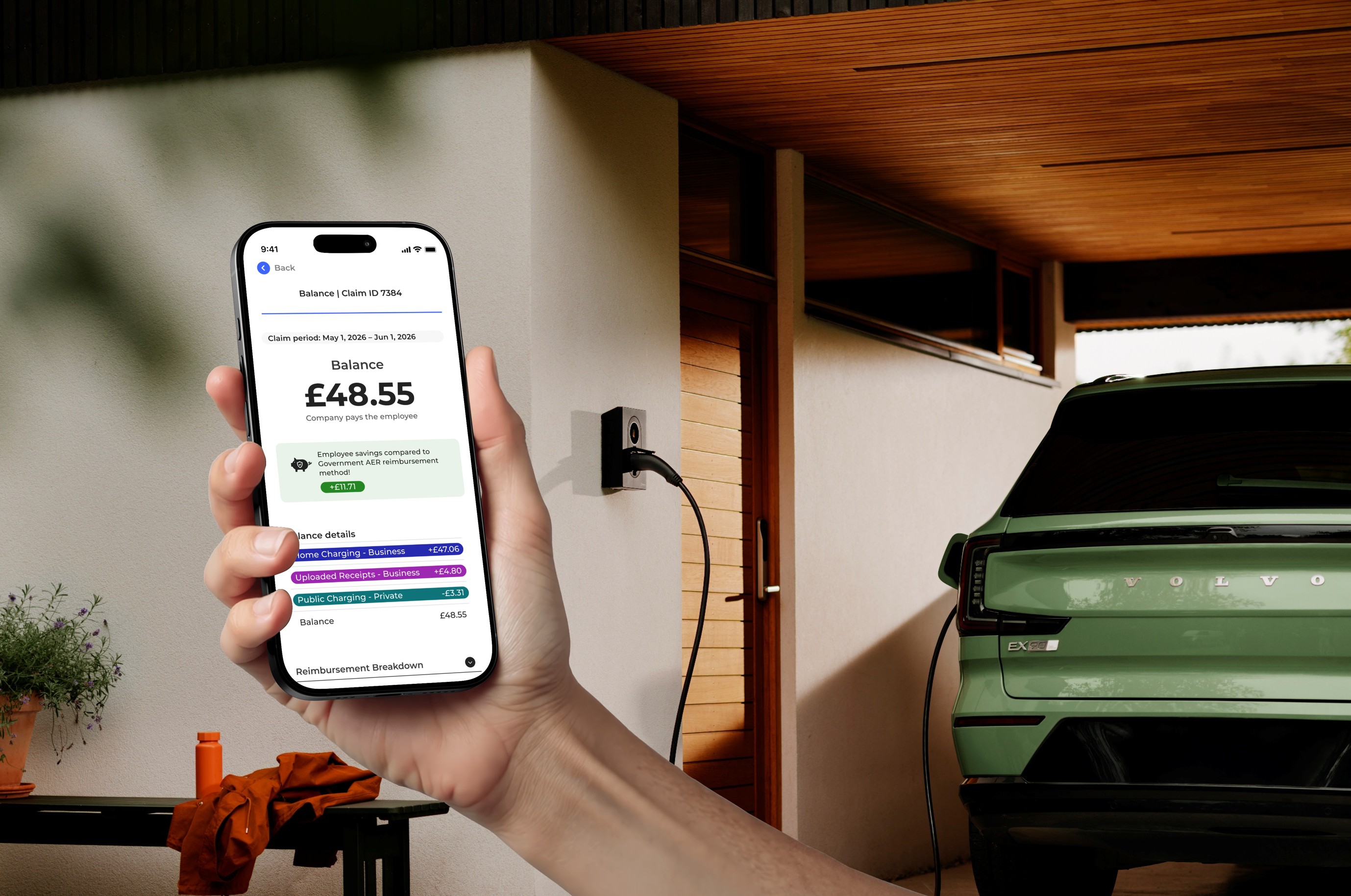
Paua Reimburse is built to handle the complexity that sits behind home charging.
It helps fleets:
- Calculate true energy costs
- Support different tariffs and charging behaviours
- Separate business and private miles
- Standardise reimbursement across drivers
- Maintain clear audit trails
The aim is to turn a fragmented process into a consistent system.
The takeaway
EV home charging reimbursement is harder than it looks because it combines:
- Variable energy pricing
- Mixed vehicle use
- Fragmented data
- Growing scale
What works for a small fleet does not hold at scale.
Fleets that recognise this early can design processes that are accurate, fair and scalable from the start.
About Paua
Paua is a UK EV charging payment platform for fleets. We help businesses pay for electric vehicle charging across public networks, home charging and shared depots, giving fleet managers control over time, cost and data as they electrify.
Read more about Paua Reimburse


.jpg)
