TL;DR
EO Charging, Market Consolidation and the Reality of EV Growth
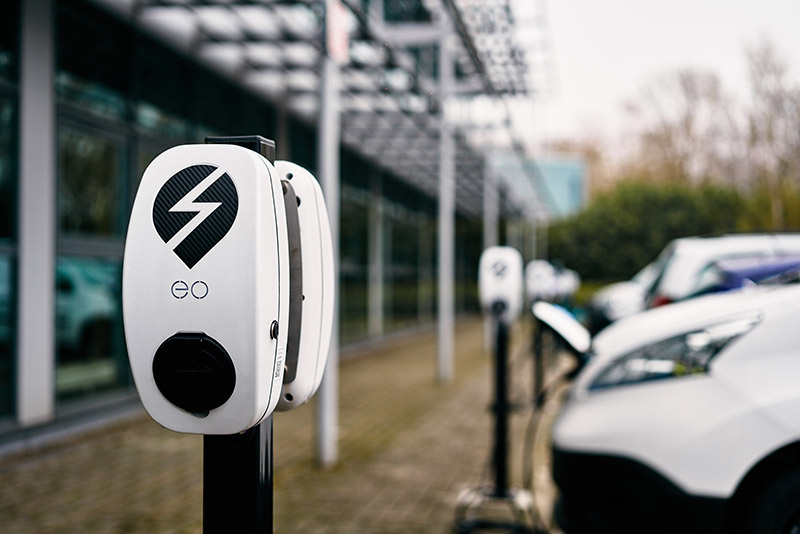
EO Charging entering administration says more about the EV market than the company itself.
We are entering a phase where the industry is still growing, but not in a straight line. There are simply too many businesses chasing too few electric vehicles, and the electric vehicle charging market is beginning to correct.
I found myself thinking about this a lot over the past week.
A moment to reflect
It was Easter week and I was down in Cornwall with my family. At one point I was standing over a rock pool, doing the usual routine of searching for fish, crabs and shells, and my mind drifted back to the news.
EO Charging going into administration felt significant.
- They were the first EV newsletter I remember reading.
- We worked with them during my time at EDF, even putting them on TV for the first time.
- And I still remember a passing comment from Charlie Jardine on my bookshelf reading selection that nudged me towards the idea of building a business of my own.
So this was not just another headline. It felt closer than that.
Standing there on the beach, I realised I had been forming a few observations about where the market is heading.
Three observations from the market
1. Market consolidation is here. And it is messy.
Over the past few years, we have seen a wave of new businesses enter the EV charging space. That was always going to happen. The opportunity is large, the mission is important, and the momentum has been building.
But we are now moving into the next phase, where consolidation begins.
In theory, consolidation sounds orderly, neat and tidy. In reality, it rarely is. It is messy, uneven, often painful, and sometimes unfair. When businesses struggle or fail, the impact is felt by teams, customers and partners. It is never just a line in a report.
Despite that, the long-term direction is still clear. The electric vehicle market will continue to grow. It just will not do so in a straight, predictable line.
2. VC and reality are diverging
Early on in the Paua journey, one of our angel investors made a comment that stayed with me. He said that good VC money can sometimes destroy a good marketplace.
At the time, I did not fully appreciate what he meant. Now it feels much clearer.
We have seen a large number of VC-backed companies enter the EV space, each trying to capture part of what is clearly a growing market. But more recently, that flow of capital has started to slow.
The reason is fairly simple. The transition to electric vehicles is happening, but not at the pace many originally expected. And venture capital is not designed to wait patiently over a ten-year horizon.
This creates a mismatch.
Right now, there are too many businesses trying to serve a market that is still maturing. There are, quite simply, too few electric vehicles on the road to support the number of solutions being built around them.
Which points to the real issue.
It is not EV infrastructure.
It is not EV technology.
It is EV adoption.
We need more electric vehicles on the road, and we need to make the experience simple enough for businesses and drivers to get there with confidence.
3. Focus matters. The “one stop shop” is a trap.
Another theme that keeps coming up is the idea of the “one stop shop”.
It is an appealing concept. The idea that one provider can do everything, neatly wrapped into a single solution, is easy to sell and easy to buy into.
But in practice, it often leads to problems.
In conversations across the industry, the tension is clear. Operators want to offer everything, but doing so stretches focus. And when focus is stretched, depth suffers.
No two fleets are the same. Their requirements differ depending on vehicles, routes, drivers and internal processes. Supporting them properly requires depth, not just breadth.
When a business tries to cover too many areas at once, it usually leads to compromises. Teams become stretched, standards slip in certain areas, and customers begin to notice.
At that point, buyers do what buyers always do. They start to unpick things. They replace the weaker parts with specialists and, over time, end up working with multiple providers anyway.
So the promise of a single, all-encompassing solution often gives way to a more fragmented reality.
That may change in the future, particularly if a well-funded player decides to consolidate services at scale. But for now, focus still matters.
So where does this leave the EV industry?
Back on that beach, as I wandered along the sand and kept half an eye on the rock pools, one thought kept coming back to me.
We need more electric vehicles on the road, and we need them there faster.
Until that happens, many of the current challenges remain. The market will feel crowded, funding will remain selective, and consolidation will continue to play out.
A healthy EV ecosystem ultimately depends on a healthy number of vehicles using it.
Final thoughts
The EV industry is still in a growth phase, but it is now moving into a more demanding stage of that journey.
Some businesses will struggle. Others will adapt. A few will emerge stronger.
Thinking of everyone at EO Charging and others working through this part of the cycle.
It is a tough phase, but it is probably a necessary one if the industry is to reach its full potential.
Paua is the leading commercial vehicle charging payment platform. Read more about why we do this here.