

TL;DR
EV home charging reimbursement is how businesses repay drivers for electricity used for business miles. It involves calculating energy use, separating private miles and paying drivers fairly.
What is EV home charging reimbursement and how does it work?
Quick answer: EV home charging reimbursement is how businesses pay drivers back for electricity used to charge a company vehicle at home for business miles.
It sounds simple. In practice, it introduces new complexity around cost, data and fairness that most fleets are not used to managing.
What is EV home charging reimbursement?
EV home charging reimbursement is the process by which a business repays an employee for electricity used to charge a company vehicle at their home.
Unlike traditional fuel:
- The energy at home is purchased by the driver
- The cost appears on a personal energy bill
- The business does not directly see or control the transaction
Reimbursement bridges that gap.
It ensures that:
- The business pays for business use
- The driver is not left out of pocket
Why EV home charging reimbursement exists
With petrol and diesel vehicles, the process is straightforward:
- Fuel is bought using a company fuel card
- Or reimbursed using a mileage rate
With EVs, a large proportion of charging happens at home. This shifts the cost from the business to the employee unless it is reimbursed.
Without reimbursement:
- Drivers fund business travel themselves
- Cost tracking becomes inconsistent
- EV adoption slows
Reimbursement is not optional. It is a core part of running an electric fleet.
What costs are being reimbursed?
The cost being reimbursed is:
Electricity used to power the vehicle for business miles
This typically includes:
- Energy drawn from the home charger
- Charged at a domestic electricity rate
- Often influenced by time of day tariffs
It does not include:
- Energy used for private miles
- General household electricity
This distinction is critical for both fairness and compliance.
How EV home charging reimbursement works
At a high level, the process follows four steps.
1. The driver charges the vehicle at home
The driver plugs in their EV using:
- A dedicated home charger
- Or a domestic socket (3-pin)
The energy used is recorded through:
- The charger
- The vehicle telematics
- Or estimated via mileage
2. The cost of that energy is calculated
This can be done in different ways depending on the approach:
- Flat rate per mile (for example AER)
- Estimated energy usage
- Actual cost per kWh based on the driver’s tariff
The level of accuracy varies significantly between methods.
3. Business miles are identified
The business needs to determine:
- How much of the charging relates to business miles
- How much relates to private miles
This is typically based on:
- Mileage logs
- Telematics
- Driver input
4. The driver is reimbursed
Once calculated and approved (line manager approvals are important to avoid fraud & abuse):
- The business pays the driver
- Usually via payroll or expenses
- Or direct the energy bill when it is a pure business miles only driver
The aim is simple:
the driver should be no better or worse off for charging at home
The two main reimbursement approaches
Mileage based reimbursement
This uses a flat rate per mile.
How it works
- Driver records business miles
- Business pays a fixed rate per mile
Pros
- Simple
- Low admin
Cons
- Does not reflect real electricity cost
- Can under or over compensate
Energy based reimbursement
This uses the actual cost of electricity.
How it works
- Measure energy used
- Apply the driver’s tariff
- Reimburse the true cost
Pros
- More accurate
- Fairer
- Reflects real pricing
Cons
- Requires better data
- More complex to manage manually
Why EV home charging reimbursement is complex
On the surface, this is just paying back electricity. In reality, several variables interact:
Tariff variation
Drivers may be on:
- Fixed tariffs
- Variable tariffs
- Time of use tariffs
Prices can change by hour, not just by supplier.
Mixed use vehicles
Most company vehicles are used for:
- Business miles
- Private miles
Separating these accurately is essential.
Multiple vehicles and drivers
Some households may:
- Charge more than one EV
- Have more than one driver
- Mix company and private vehicles
Attribution becomes harder without structured data.
Data gaps
Not all chargers or vehicles provide:
- Accurate energy data
- Time stamped usage
- Vehicle level tracking
This forces fleets into estimation.
What happens if you get it wrong
Poor reimbursement processes lead to predictable issues:
- Drivers being out of pocket
- Disputes over payments
- Inconsistent finance records
- Increased admin burden
- Loss of trust
Over time, this slows EV adoption and increases operational friction.
What good EV home charging reimbursement looks like
A well designed approach is:
- Accurate
Reflects real energy costs - Fair
Drivers are not disadvantaged - Compliant
Meets HMRC requirements - Scalable
Works as fleets grow
Achieving all four at once is the challenge.
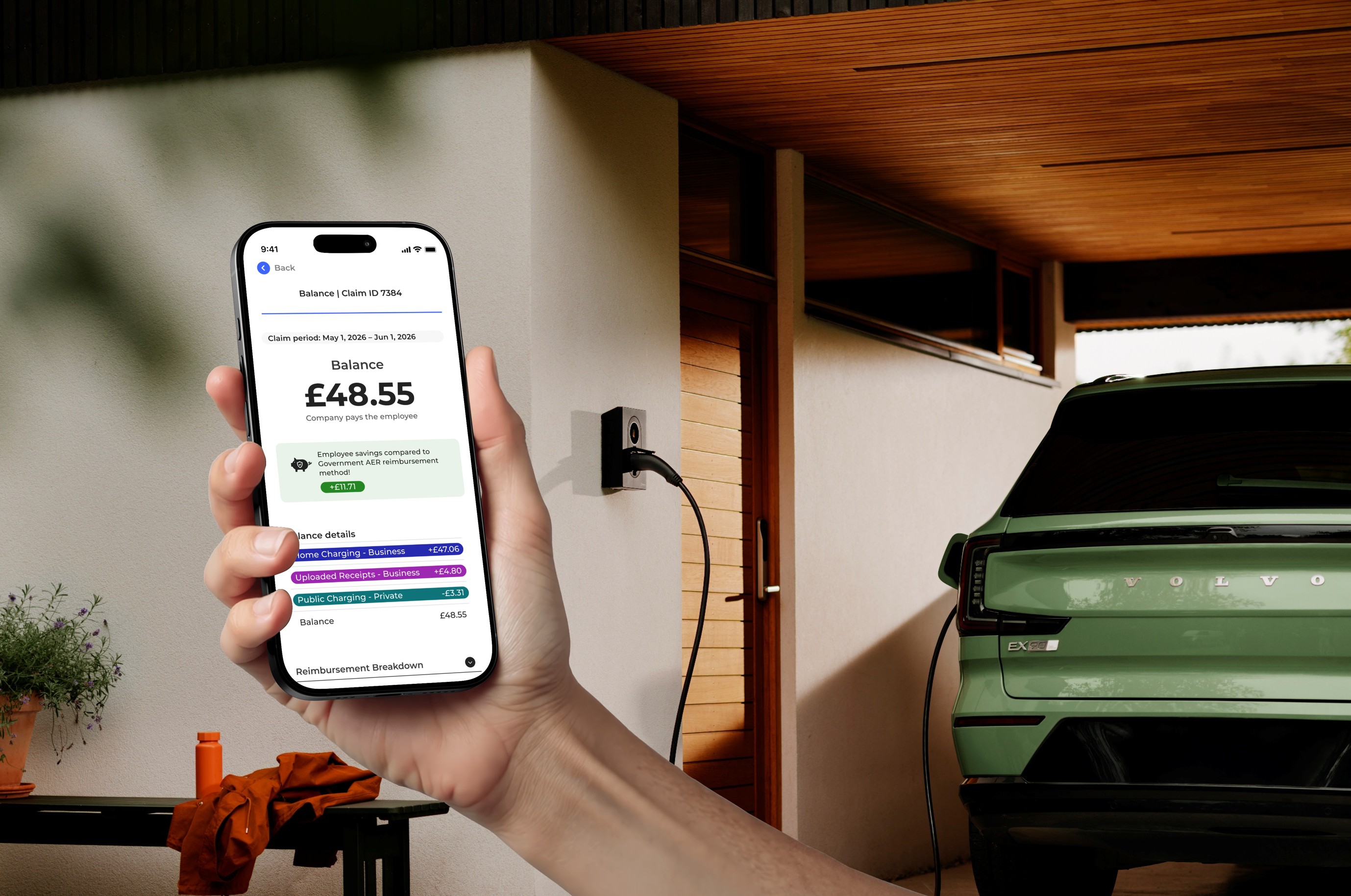
How Paua Reimburse supports this
Paua Reimburse helps fleets manage home charging reimbursement as a system rather than a manual task.
It enables:
- Accurate calculation of home charging costs
- Support for different tariffs and driver types
- Separation of business and private miles
- Clear, auditable records
- Timely and consistent payments
This reduces complexity for finance teams and improves the experience for drivers.
The takeaway
EV home charging reimbursement is the mechanism that ensures drivers are paid back for business energy use.
- Drivers pay for electricity upfront
- Businesses reimburse business miles
- Accuracy depends on data and method
- Complexity increases as fleets scale
Understanding how it works is the first step to managing it properly.
About Paua
Paua is a UK EV charging payment platform for fleets. We help businesses pay for electric vehicle charging across public networks, home charging and shared depots, giving fleet managers control over time, cost and data as they electrify.
Read more about Paua Reimburse


.jpg)
