

TL;DR
EV home charging reimbursement requires data on energy used, electricity cost, charging time and business miles. Without this, fleets rely on inaccurate estimates.
What data do you need for EV home charging reimbursement?
Short answer: you need accurate data on energy used, electricity cost, charging timing and the proportion of business miles.
Most fleets underestimate this. The challenge is not deciding to reimburse, it is having the right data to do it accurately and consistently.
Why data matters in EV reimbursement
Reimbursing EV home charging is fundamentally a data problem.
To pay drivers fairly, a business needs to:
- Understand how much energy was used
- Know what that energy cost
- Confirm it relates to business miles
Without reliable data, fleets rely on:
- Estimates
- Averages
- Assumptions
These quickly lead to inaccuracies.
The four core data components
At a minimum, EV home charging reimbursement requires four key data sets.
1. Energy used (kWh)
This is the foundation.
You need to know:
- How much electricity was used to charge the vehicle
Measured in:
- Kilowatt hours (kWh)
Sources include:
- Smart charger data
- Vehicle data
- Estimated consumption
Why it matters
Without accurate energy usage, everything else is guesswork.
2. Cost per kWh
Electricity cost is not fixed.
You need to know:
- What the driver pays per kWh
This depends on:
- Supplier
- Tariff
- Time of day
Examples:
- Flat tariff with one rate
- Time of use tariff with different rates
Why it matters
The same amount of energy can have different costs depending on when it is used.
3. Charging time
Timing is often overlooked.
You need to know:
- When the charging took place
This allows you to:
- Apply the correct tariff rate
- Reflect real cost
Without timing:
- Fleets use averages
- Accuracy is reduced
4. Business miles proportion
Not all charging is for business use.
You need to know:
- What percentage of usage relates to business miles
This requires:
- Mileage tracking
- Or usage estimation
Why it matters
Only business energy should be reimbursed.
Supporting data that improves accuracy
Beyond the core four, additional data improves outcomes.
Vehicle identification
You need to confirm:
- Which vehicle was charged
This is important when:
- Multiple vehicles are present
- Company and private vehicles are mixed
Driver profile
Drivers differ in:
- Tariffs
- Driving patterns
- Charging behaviour
Understanding this helps:
- Apply the right logic
- Avoid one size fits all errors
Charger data
Smart chargers can provide:
- Energy usage
- Time stamps
- Session level detail
This is often the most reliable source.
Tariff structure
Beyond cost per kWh, understanding:
- Peak and off peak windows
- EV specific pricing
Improves accuracy further.
Where fleets struggle
Most challenges come from gaps in data.
Incomplete data
- Missing tariff details
- No time based information
Inconsistent data
- Different formats from different drivers
- Manual entry errors
Estimated data
- Using averages instead of real usage
- Applying standard rates
These issues lead to:
- Inaccurate reimbursement
- Driver disputes
- Finance uncertainty
Why manual data collection fails
Spreadsheets and manual processes rely on:
- Driver input
- Static data
- Periodic updates
This creates problems:
- Data goes out of date
- Inputs vary in quality
- Validation is limited
As fleets scale, maintaining data quality becomes increasingly difficult.
What good data looks like
A strong reimbursement system uses data that is:
- Accurate
Based on real usage - Timely
Updated regularly - Standardised
Consistent across drivers - Auditable
Traceable and verifiable
This enables:
- Fair payments
- Consistent processes
- Confident reporting
How Paua Reimburse handles data
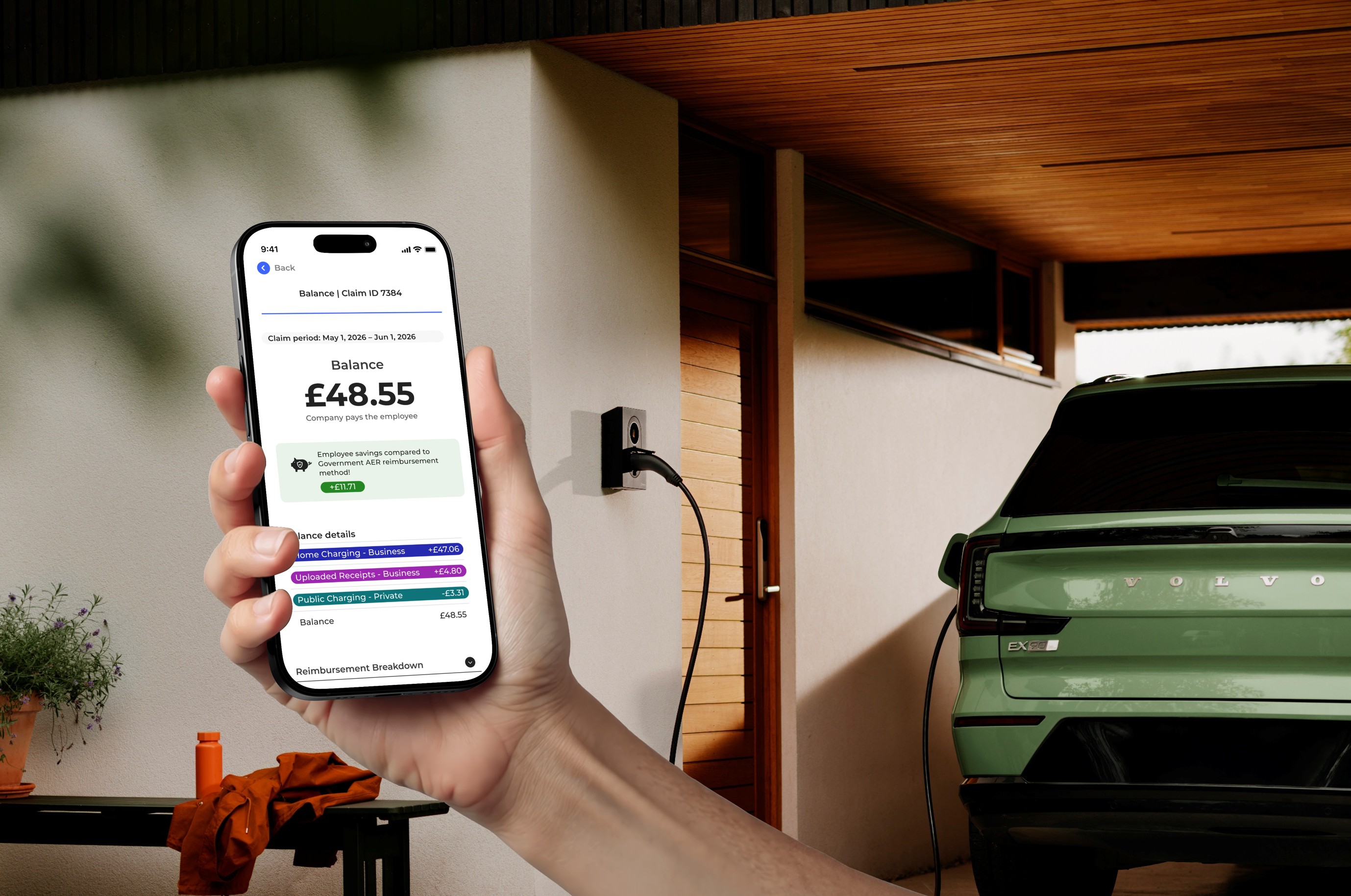
Paua Reimburse is designed to bring these data sets together in one place.
It helps fleets:
- Capture accurate energy usage
- Apply tariff specific pricing
- Account for charging timing
- Separate business and private miles
- Standardise data across the fleet
This removes reliance on manual inputs and reduces the risk of error.
The takeaway
EV home charging reimbursement depends on having the right data.
At a minimum, fleets need:
- Energy used
- Cost per kWh
- Charging time
- Business miles proportion
Without this, reimbursement becomes an estimate rather than a calculation.
Fleets that invest in data early build processes that are accurate, fair and scalable.
About Paua
Paua is a UK EV charging payment platform for fleets. We help businesses pay for electric vehicle charging across public networks, home charging and shared depots, giving fleet managers control over time, cost and data as they electrify.
Read more about Paua Reimburse


.jpg)
