
TL;DR
Paua gives utilities auditable EV charging data that maps directly to RIIO outputs, ESG disclosures and Net Zero plans. It turns fleet charging into reportable, defensible infrastructure rather than an operational headache.
Mapping Paua to RIIO, ESG, and Net Zero Reporting Frameworks
Executive Context
For utilities, EV fleet charging is no longer an operational detail; it is a reportable, auditable contributor to regulatory performance, environmental outcomes, and social value delivery.
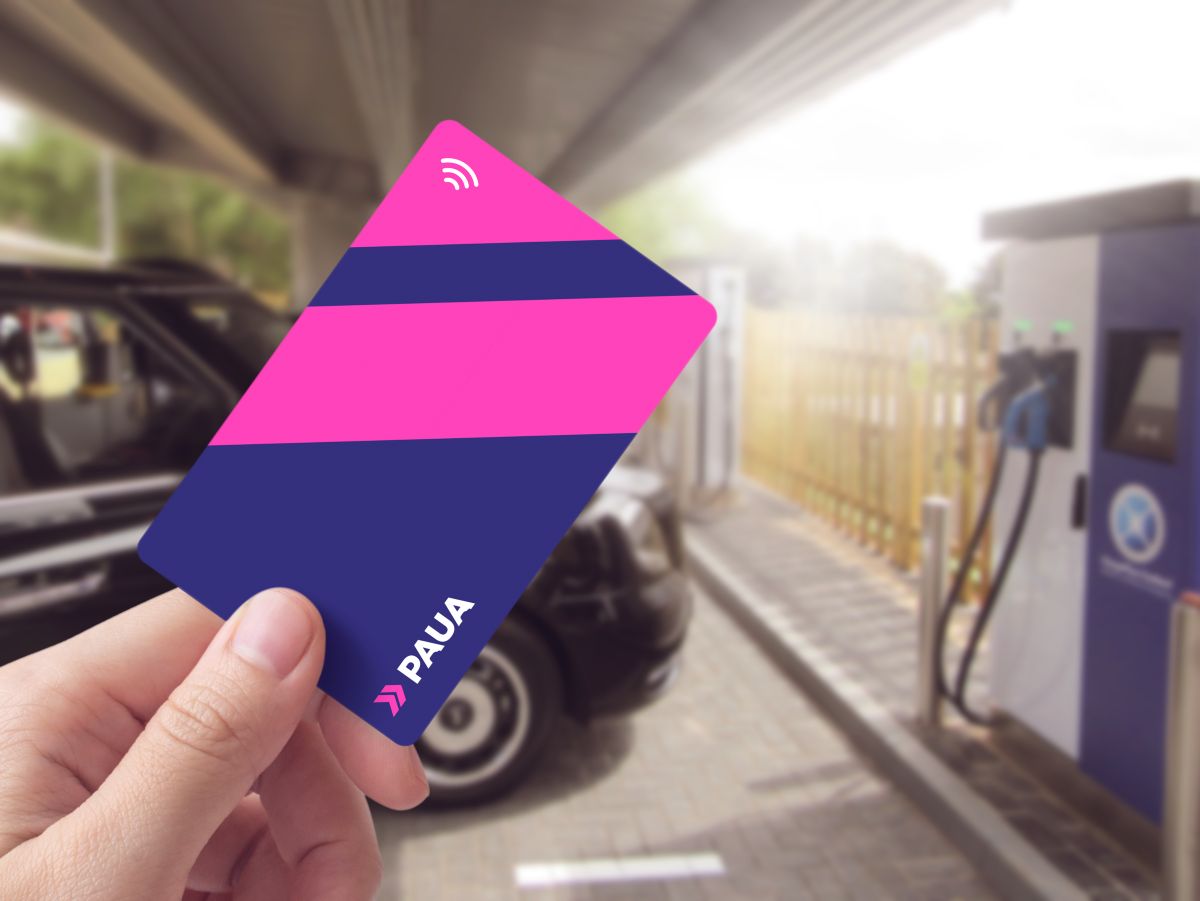
The Paua RFID Card, alongside the Paua App, Dashboard, and reporting suite, provides the structured data, controls, and transparency required to support RIIO price control outcomes, ESG disclosures, and Net Zero transition plans.

1. RIIO Alignment (Revenue = Incentives + Innovation + Outputs)
RIIO Output Areas Supported by Paua
🔹 Customer Service & Reliability
- Utility fleets underpin fault response, maintenance, and customer service delivery.
- The Paua RFID Card enables nationwide, 24/7 charging access, reducing vehicle downtime and supporting operational resilience.
- Live charging visibility via the Paua Dashboard supports proactive fleet management, reducing service disruption risk.
RIIO Narrative Fit:
Paua supports delivery of reliable, responsive services by ensuring electrified fleet availability during planned and unplanned operational activity.
🔹 Environmental Impact & Decarbonisation
- Every charging session completed with the Paua RFID Card captures energy (kWh), time, and location data.
- This enables accurate reporting of EV energy consumption and displacement of ICE fuel usage.
- Supports evidence-based fleet decarbonisation tracking within RIIO environmental outputs.
RIIO Narrative Fit:
Paua enables measurable progress against decarbonisation targets through auditable EV energy data at vehicle and fleet level.
🔹 Cost Efficiency & Consumer Value
- Paua consolidates charging across multiple networks into one platform and invoice.
- Transparent pricing and benchmarking (average cost per kWh) supports cost control and value-for-money obligations.
- Overstay fee visibility reduces unnecessary cost leakage.
RIIO Narrative Fit:
Paua supports efficient expenditure and cost optimisation, protecting consumers while enabling fleet electrification at scale.
🔹 Innovation Enablement
- Paua Pro APIs enable integration with fleet, telematics, and asset systems.
- Paua Share unlocks underused private infrastructure, reducing reliance on new capital investment.
- Paua Controls enables behavioural and cost governance innovation.
RIIO Narrative Fit:
Paua represents a scalable, digital innovation that improves outcomes without requiring disproportionate infrastructure spend.
2. ESG Alignment
Environmental (E)
The Paua RFID Card directly supports environmental reporting through:
- Accurate measurement of electricity consumed (kWh) for fleet charging
- Removal of manual estimation or reimbursement-based reporting
- Data suitable for Scope 1 fuel displacement and Scope 2 electricity reporting
- All energy backed by renewable power
ESG Narrative Fit:
Paua provides verifiable EV charging data, enabling robust emissions reporting and demonstrable progress toward Net Zero commitments.
Social (S)
Utility fleets are workforce-critical.
Paua supports social outcomes by:
- Reducing driver stress through simple, reliable charging access
- Supporting shift workers, engineers, and emergency responders
- Minimising out-of-pocket expense exposure for frontline staff
ESG Narrative Fit:
Paua improves workforce experience and safety by removing friction from fleet electrification and supporting inclusive EV adoption.
Governance (G)
Governance is where many EV charging solutions fall short.
The Paua RFID Card strengthens governance through:
- Full audit trails for every transaction
- HMRC-compliant invoicing and reporting
- Role-based access controls in the Paua Dashboard
- Instant card freeze/block for misuse prevention
ESG Narrative Fit:
Paua embeds governance and financial control into EV charging, reducing risk and strengthening assurance.
3. Net Zero Transition Plan Alignment
Measurement & Baseline Integrity
Net Zero plans require defensible baselines.
Paua enables:
- Accurate baselining of EV energy consumption
- Vehicle- and driver-level tracking
- Time-series data for year-on-year comparison
Net Zero Narrative Fit:
Paua provides the data integrity required to baseline, track, and evidence fleet decarbonisation progress.
Delivery & Operationalisation
Net Zero commitments fail without operational delivery.
The Paua RFID Card supports delivery by:
- Removing barriers to EV adoption
- Enabling scale without administrative growth
- Supporting mixed-fleet transition periods
Net Zero Narrative Fit:
Paua converts Net Zero ambition into operational reality by embedding EV charging into daily fleet operations.
Assurance & Audit Readiness
Net Zero claims increasingly face external scrutiny.
Paua supports assurance by:
- Providing exportable, auditable datasets
- Aligning with finance and compliance systems
- Supporting third-party verification processes
Net Zero Narrative Fit:
Paua strengthens the credibility of Net Zero reporting through transparent, auditable charging data.
4. Practical Reporting Use Cases (How This Shows Up in Reports)
Utilities can directly reference Paua in:
- RIIO business plans and annual performance reports
- ESG disclosures and sustainability reports
- Net Zero transition plans and progress updates
- Internal audit and assurance documentation
- Regulatory submissions and stakeholder briefings
Example phrasing:
“Public EV fleet charging is managed via the Paua platform, providing auditable, HMRC-compliant data on energy use, cost, and vehicle activity to support regulatory, ESG, and Net Zero reporting.”
Final Leadership Takeaway
For utilities, EV fleet charging is now:
- A regulatory issue (RIIO)
- A reporting issue (ESG)
- A credibility issue (Net Zero)
The Paua RFID Card and Paua platform provide the data, governance, and resilience required to meet all three; without creating operational burden.
Paua is not just enabling charging.
It is enabling reportable, defensible decarbonisation.
Paua is the EV charging payment platform for business.




.jpg)
