

TL;DR
Reimburse EV home charging by paying the true cost of business energy use. Mileage rates are simple but often inaccurate. Scalable fleets use data driven, automated approaches to ensure fairness and control.
How to reimburse EV home charging for fleet drivers
Short answer: reimburse the actual cost of energy used for business driving, using accurate data and a scalable system.
Longer answer: most fleets start simple and quickly realise EV home charging reimbursement is harder than it looks. Getting it right means balancing fairness, compliance and operational efficiency.
Here’s how to do it properly.
Why EV home charging reimbursement matters
When drivers charge at home:
- They pay for electricity upfront
- The cost sits on their personal energy bill
- The business benefits from the energy used
If reimbursement is:
- Missing → drivers pay to work
- Inaccurate → drivers lose trust
- Slow → frustration builds
This is not just admin. It directly impacts:
- Driver satisfaction
- EV adoption
- Finance confidence
Step 1: Decide what you are reimbursing
Start with a clear principle:
👉 Only reimburse energy used for business driving
This sounds obvious, but most vehicles are used for both:
- Business journeys
- Personal journeys
So you need a method to:
- Identify total energy used
- Attribute a portion to business use
There are two main approaches.
Step 2: Choose your reimbursement method
Option 1: Mileage based reimbursement (AER)
This uses a flat rate per mile, such as the HMRC Advisory Electric Rate.
Pros
- Simple
- Easy to administer
- Low data requirements
Cons
- Often inaccurate
- Does not reflect real energy prices
- Can under compensate drivers
Good for:
- Small fleets
- Early stage EV adoption
Option 2: Energy based reimbursement
This reimburses the actual cost of electricity used.
Pros
- More accurate
- Fairer for drivers
- Reflects real tariffs and usage
Cons
- Requires better data
- Hard to manage manually
Good for:
- Scaling fleets
- Businesses focused on fairness and control
Step 3: Capture the right data
To reimburse accurately, you need a few key inputs:
- Cost per kWh from the driver’s tariff
- Energy used for charging
- When the energy was used
- Which vehicle was charged
- Proportion of business use
This is where complexity creeps in.
Energy tariffs vary by:
- Supplier
- Time of day
- Fixed vs variable rates
Without proper data, fleets rely on estimates. Estimates create errors.
Step 4: Separate business and private use
This is one of the hardest parts.
Common approaches include:
- Mileage logs
- Telematics data
- Driver declarations
- Line manager approvals
Each has trade offs between:
- Accuracy
- Effort
- Risk of manipulation
The goal is simple:
Reimburse business energy only, and be able to justify it.
Step 5: Create an approval process
Before payment, most fleets include a level of validation:
- Line manager approval
- Finance checks
- Policy thresholds
This helps:
- Prevent fraud
- Catch errors
- Maintain consistency
At small scale this is manageable. At larger scale it becomes a bottleneck.
Step 6: Pay drivers accurately and on time
This is where everything comes together.
A good reimbursement process should be:
- Predictable
- Timely
- Transparent
Delays or inconsistencies here undermine everything else.
Drivers care less about the method and more about the outcome:
“Am I being paid fairly and reliably?”
Why spreadsheets fail quickly
Many fleets start with spreadsheets. It works… briefly.
At small scale:
- Data can be entered manually
- Errors are manageable
As fleets grow:
- Tariffs differ by driver
- Charging patterns vary
- Data becomes inconsistent
- Drivers forget to add details
- Receipts are harder to obtain
- Admin time explodes
Common issues:
- Incorrect calculations
- Missing data
- Delayed payments
- Audit challenges
What felt simple becomes fragile and all consuming.
What good looks like
Leading fleets move towards a model that is:
- Accurate
Reflects real energy costs - Fair
Drivers are not out of pocket - Compliant
Meets HMRC requirements - Scalable
Works for 50, 500 or 5,000 vehicles
This usually means:
👉 Moving beyond manual processes and into structured systems
How Paua Reimburse helps
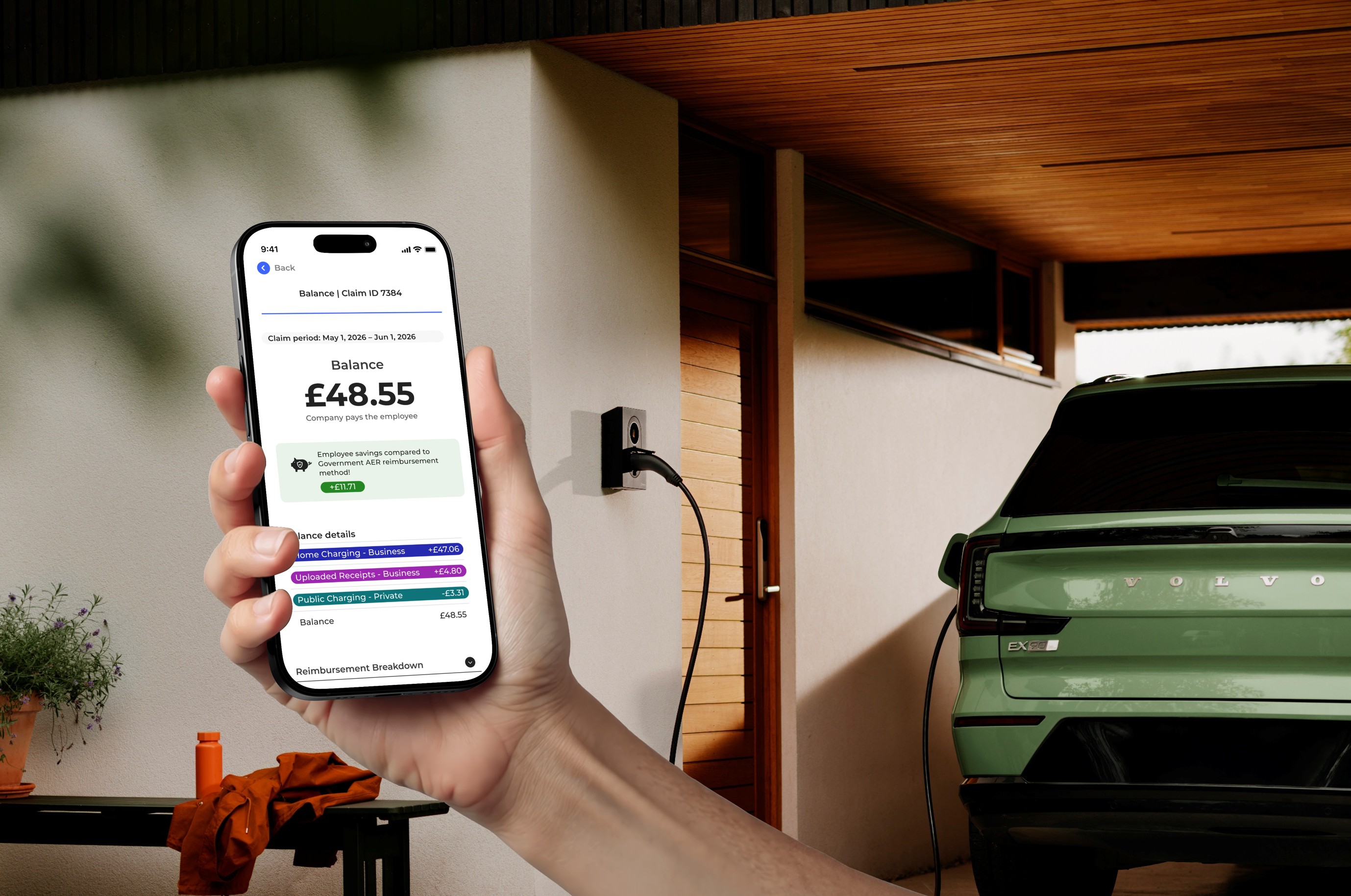
Paua Reimburse is designed to handle the complexity of home EV charging at scale.
It helps fleets:
- Calculate the true cost of home charging
- Support different tariffs and driver types
- Separate business and personal energy use
- Maintain clear, auditable records
- Pay drivers accurately and on time
The result:
- Less admin
- Fewer disputes
- More confident finance teams
- Happier drivers
Common mistakes to avoid
- Relying solely on flat mileage rates
- Ignoring tariff complexity
- Mixing personal and business energy
- Over relying on spreadsheets
- Delaying reimbursement payments
These mistakes are common and fixable.
The takeaway
Reimbursing EV home charging is not just about paying drivers back. It is about building a system that works as fleets scale.
- Drivers pay upfront
- Businesses must reimburse business use
- Accuracy and fairness matter
- Manual processes do not scale
Get it right early, and everything else becomes easier.
About Paua
Paua is a UK EV charging payment platform for fleets. We help businesses pay for electric vehicle charging across public networks, home charging and shared depots, giving fleet managers control over time, cost and data as they electrify.
Contact us to learn more


.jpg)
