

TL;DR
Calculate EV home charging costs using actual energy used, real tariff rates and the share of business miles. Averages are simple but less accurate. Data driven approaches deliver fairness and control.
How to calculate EV home charging costs accurately
What you will learn in this article: multiply the energy used (kWh) by the true cost of electricity at the time it was used, then apply the proportion of business miles.
In practice, most fleets oversimplify this and end up with inaccurate or unfair results. Calculating EV home charging costs properly requires more than a single number.
Why accuracy matters
Getting the calculation right is not just a finance exercise.
If costs are:
- Understated, drivers are out of pocket
- Overstated, businesses overspend
- Inconsistent, trust breaks down
Accuracy directly affects:
- Driver satisfaction
- Cost control
- Audit confidence
The basic formula
At its simplest, EV home charging cost is:
Energy used (kWh) × cost per kWh = total cost
Then:
Total cost × proportion of business miles = reimbursable cost
Simple on paper. Harder in reality.
Step 1: Measure energy used (kWh)
This is the foundation of the calculation.
Energy used can come from:
- Smart charger data
- Vehicle data
- Estimated consumption based on mileage
Best option: charger level data
- Most accurate
- Time stamped
- Direct measurement
Alternative: vehicle data
- Useful fallback
- May lack tariff timing detail
Least accurate: estimated usage
- Based on miles driven and average efficiency
- Prone to error
Accuracy improves as you move from estimation to direct measurement.
Step 2: Determine cost per kWh
This is where most complexity sits.
Electricity pricing varies by:
- Supplier
- Tariff
- Time of day
Drivers may be on:
- Flat tariffs
- Time of use tariffs
- EV specific tariffs
Flat tariff example
- Same price per kWh all day
- Easier to calculate
Time of use tariff example
- Lower rates overnight
- Higher rates during peak hours
This means:
The same kWh can cost different amounts depending on when it is used
Step 3: Account for when charging happens
Timing matters.
If a driver charges:
- Overnight, cost may be low
- During peak hours, cost may be higher
Accurate calculation requires:
- Time stamped energy usage
- Matching tariff rates to that timing
Without this, fleets often:
- Use an average rate
- Lose accuracy
Step 4: Identify the vehicle and usage
In many households:
- More than one EV may be charged
- Both company and private vehicles may be present
You need to:
- Attribute energy to the correct vehicle
- Avoid mixing different use cases
This becomes critical for audit and fairness.
Step 5: Separate business and private miles
Most vehicles are used for:
- Business miles
- Private miles
Only business energy should be reimbursed.
Common methods include:
- Mileage logs
- Telematics data
- Driver declarations
Each method balances:
- Accuracy
- Effort
- Risk
For added accuracy ensure line manager approvals
Step 6: Calculate the reimbursable amount
Once you have:
- Energy used
- Cost per kWh
- Timing
- Business miles proportion
You can calculate:
Reimbursable cost = total energy cost × business use percentage
This ensures:
- The business pays for business energy
- Private use is excluded
Where calculations go wrong
Most fleets do not fail on the formula. They fail on the inputs.
Using a single average rate
- Ignores tariff variation
- Leads to under or over payment
Ignoring time of use pricing
- Misses cheaper overnight charging
- Skews cost assumptions
Estimating energy usage
- Based on assumptions, not data
- Reduces accuracy
Mixing private and business miles
- Leads to over reimbursement
- Creates compliance risk
Inconsistent driver data
- Different inputs per driver
- No standardisation
Why mileage rates are not the same as cost calculation
Mileage rates, such as the Advisory Electric Rate, are:
- Simplifications
- Averages
- Designed for ease, not precision
They do not:
- Reflect individual tariffs
- Capture real energy cost
- Adjust for charging behaviour
They are useful for simplicity, but they are not the same as calculating actual cost.
What accurate calculation looks like in practice
A robust approach includes:
- Real energy usage data
- Tariff aware cost calculation
- Time based pricing
- Clear separation of business miles
- Consistent methodology across drivers
This creates:
- Fair outcomes
- Predictable costs
- Strong audit position
The challenge of doing this manually
On a spreadsheet, this quickly becomes complex:
- Different tariffs per driver
- Changing energy prices
- Variable charging times
- Multiple vehicles
Manual processes lead to:
- Errors
- Delays
- Inconsistent results
What works for 10 drivers struggles at 100.
How Paua Reimburse improves accuracy
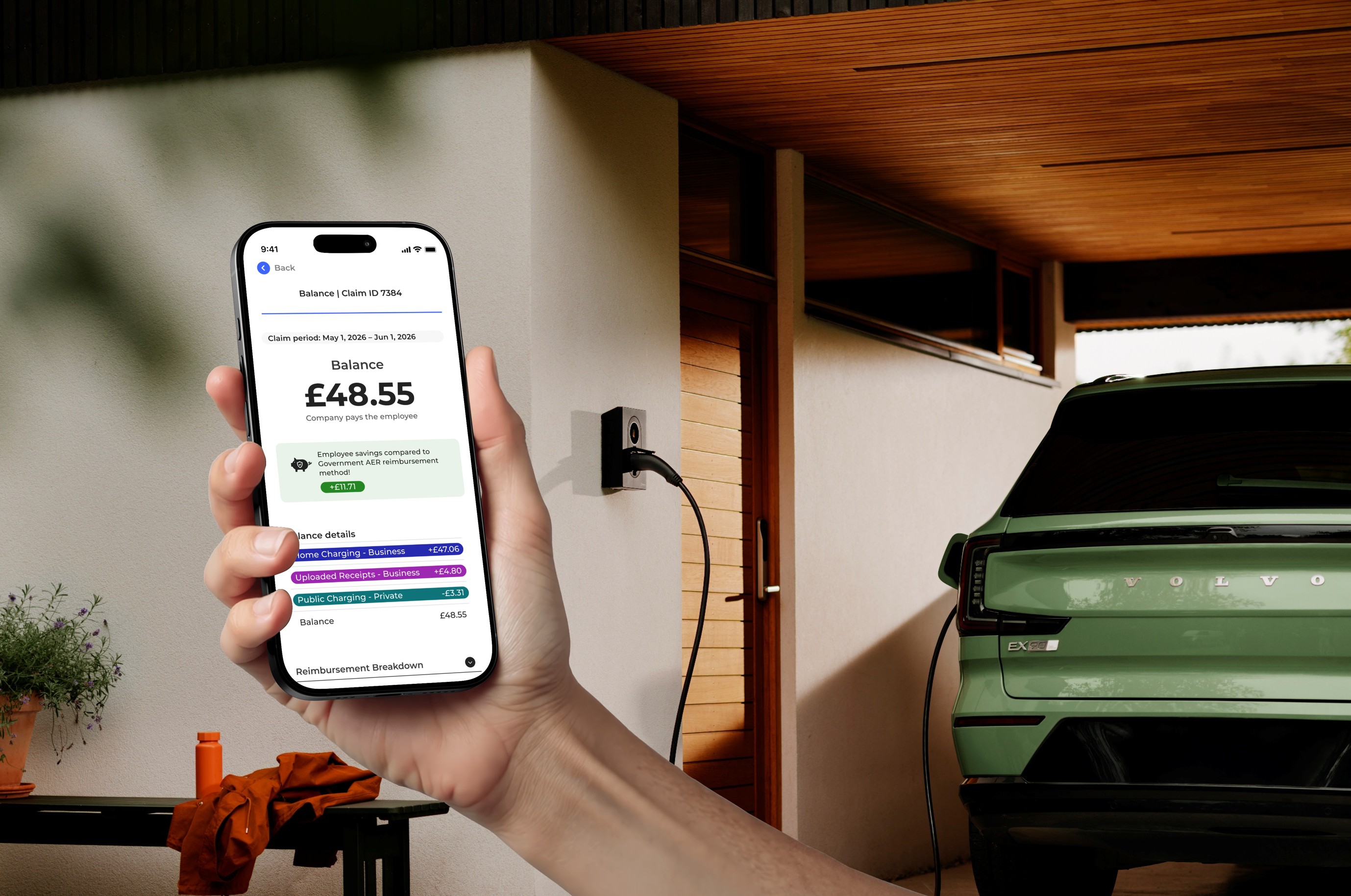
Paua Reimburse is designed to calculate EV home charging costs accurately at scale.
It helps fleets:
- Use real energy data
- Apply tariff specific pricing
- Account for time of use charging
- Separate business and private miles
- Standardise calculations across the fleet
This reduces guesswork and improves confidence in every reimbursement.
The takeaway
Calculating EV home charging costs accurately requires more than a simple rate.
- Energy use must be measured
- Tariffs must be applied correctly
- Timing must be considered
- Business miles must be separated
Fleets that rely on averages get approximate results. Fleets that use data get accurate ones.
About Paua
Paua is a UK EV charging payment platform for fleets. We help businesses pay for electric vehicle charging across public networks, home charging and shared depots, giving fleet managers control over time, cost and data as they electrify.
Read more about Paua Reimburse



.jpg)
