

TL;DR
EV home charging reimbursement for fleets requires clear policy, accurate cost calculation and scalable processes. Simple methods work early, but data driven approaches are needed as fleets grow.
EV home charging reimbursement for fleets: a practical guide
Key idea: fleets reimburse EV home charging by calculating the cost of electricity used for business miles and paying drivers back using a consistent, scalable process.
In reality, most fleets start simple and quickly hit complexity. This guide walks through how to do it properly, from policy to payment.
Why fleets need a practical approach
Home charging is:
- Cheap
- Convenient
- Widely adopted by drivers
But it shifts energy costs into the home, where traditional fleet processes do not apply.
Without a clear approach:
- Drivers are out of pocket
- Finance teams lack control
- Admin grows quickly
A practical system solves all three.
Step 1: Define your reimbursement policy
Before tools or data, start with policy.
Your policy should answer:
- What counts as business miles?
- How will home charging be reimbursed?
- What method will be used?
- How often will drivers be paid?
- What evidence is required?
- What to do about private miles?
Clarity here avoids disputes later.
Step 2: Choose your reimbursement model
Fleets typically choose between two models.
Mileage based model
- Uses a flat rate per mile
- Often aligned to HMRC Advisory Electric Rate
Best for
- Simplicity
- Early stage fleets
Limitations
- Not reflective of real energy costs
- Can under compensate drivers
Energy based model
- Uses actual electricity cost (from vehicle or charger)
- Based on kWh usage and tariff
Best for
- Accuracy
- Fairness
- Scaling fleets
Limitations
- Requires better data
- More complex to implement manually
Step 3: Understand your driver base
Not all drivers are the same. A practical approach accounts for variation.
Consider:
- Drivers with a home charger
- Drivers without off street parking
- Drivers with time of use tariffs
- Drivers doing high business mileage
- Drivers with mixed business and private miles
A single approach may not fit all.
Step 4: Capture the right data
To reimburse accurately, fleets need:
- Cost per kWh
- Energy used
- Time of charging
- Vehicle identification
- Business miles proportion
- Public receipt data (where applicable)
This data can come from:
- Smart chargers
- Vehicle data
- Telematics
- Driver inputs
The more accurate the data, the fairer the outcome.
Step 5: Separate business and private miles
This is a core requirement.
Common approaches include:
- Mileage logs
- Telematics tracking
- Policy based assumptions
Each has trade offs. The goal is consistency and auditability.
Step 6: Build a scalable process
A practical system includes:
- Data collection
- Validation and approval
- Payment process
- Record keeping
At small scale this may be manual. As fleets grow, automation becomes necessary.
Step 7: Avoid spreadsheet dependency
Spreadsheets are often the starting point.
They quickly become a problem when:
- Tariffs differ by driver
- Charging patterns vary
- Volumes increase
Risks include:
- Errors
- Delays
- Lack of audit trail
Spreadsheets are useful for pilots, not long term operations.
Step 8: Align finance and fleet teams
Home charging reimbursement sits between:
- Fleet operations
- Finance
- Payroll
Alignment is critical on:
- Policy
- Calculation method
- Payment timing
- Compliance approach
Without alignment, processes fragment.
Step 9: Ensure compliance and auditability
Fleets need to be able to show:
- How reimbursement is calculated
- What data supports it
- That only business miles are reimbursed
This reduces risk around:
- Tax treatment
- HMRC queries
- Internal audits
Step 10: Pay drivers reliably
From the driver’s perspective, the system is judged on one thing:
Do I get paid fairly and on time?
Late or inconsistent payments undermine even the best designed policy.
What changes as fleets scale
At:
- 10 vehicles, manual processes work and individuals can be held accountable
- 50 vehicles, friction appears and drivers behind the lack of process
- 500 vehicles, systems are required to make it work
Scaling introduces:
- More tariffs
- More data
- More edge cases
- More risk
A practical approach anticipates this early.
How Paua Reimburse supports fleet operations
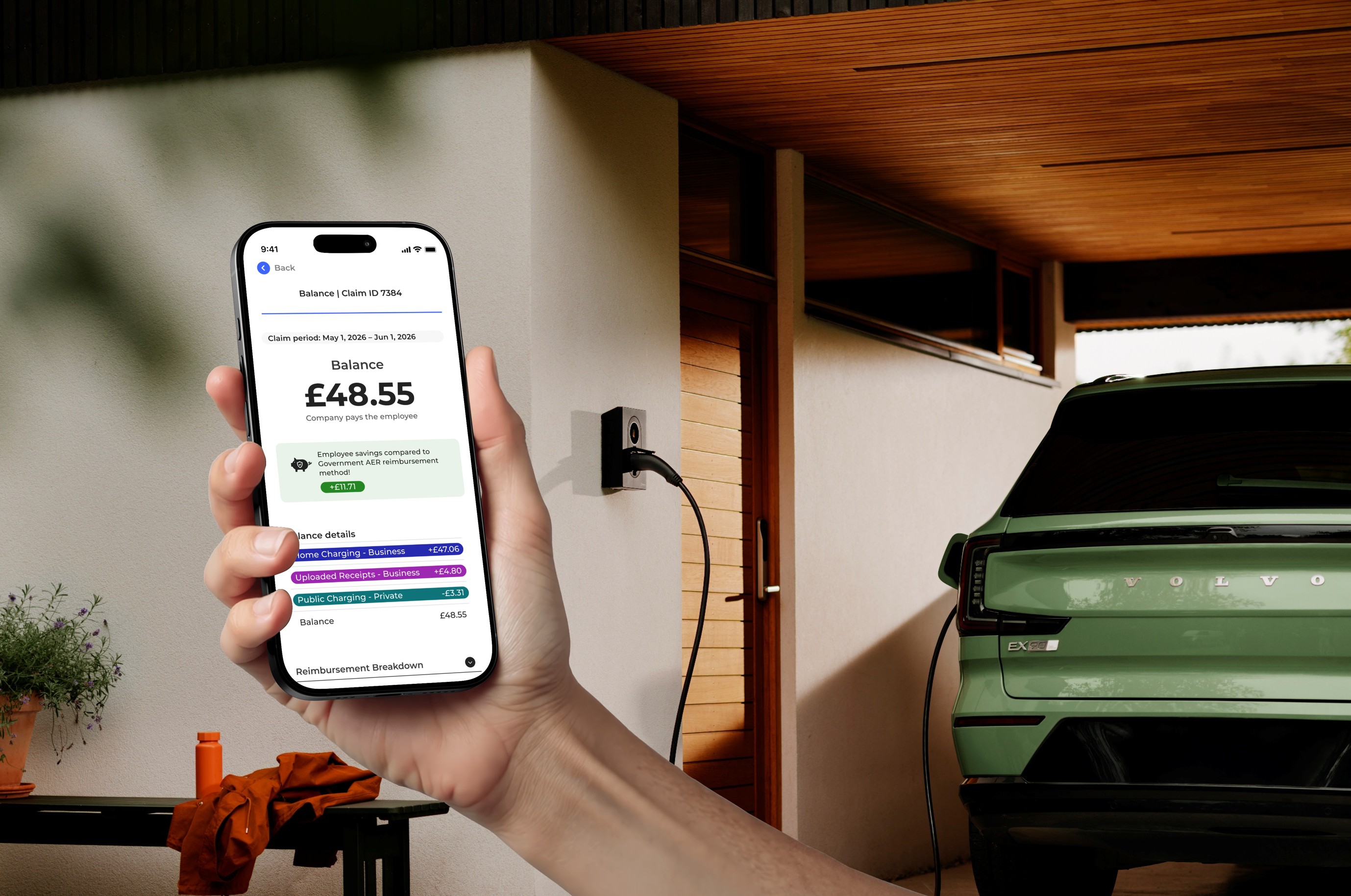
Paua Reimburse is built for fleets managing home charging at scale.
It helps:
- Calculate true home charging costs
- Support multiple tariffs and driver types
- Separate business and private miles
- Provide clear audit trails
- Enable consistent, timely payments
This reduces admin and gives finance teams confidence in the process.
Common pitfalls to avoid
- Treating reimbursement as an afterthought
- Using a single flat rate for all drivers
- Ignoring tariff variation
- Over relying on manual processes
- Delaying payments
- Not approving drivers data
These issues compound as fleets grow.
The takeaway
A practical approach to EV home charging reimbursement combines:
- Clear policy
- Appropriate calculation method
- Reliable data
- Scalable processes
Fleets that get this right early avoid cost, complexity and frustration later.
About Paua
Paua is a UK EV charging payment platform for fleets. We help businesses pay for electric vehicle charging across public networks, home charging and shared depots, giving fleet managers control over time, cost and data as they electrify.
Read more about Paua Reimburse


.jpg)
