TL;DR
Credit cards may work for everyday purchases, but they cannot replace specialist EV charging cards for commercial fleets.
From incomplete charger coverage and fraud controls to VAT receipts, home reimbursement and charging maps, fleet operators need much more than a payment method.
Here are nine reasons why the future of fleet EV charging lies in integrated platforms, not bank cards.
9 reasons bank cards won't replace fleet EV charging cards
Could Visa and Mastercard become the future of electric vehicle charging? For private motorists, perhaps. For commercial fleets, the answer is more complicated.
I've been looking at this question since 2020, when we first started building Paua.
At the time, we considered using traditional bank-card payment networks to support EV charging. The technology wasn't ready. Many chargers didn't accept bank cards, the data was unreliable and the transaction data couldn't reliably tell us whether someone had purchased electricity for an electric vehicle. And don't start me on VAT receipts.
Six years later, things have changed. Contactless payment is increasingly common at public charge points, and some payment providers believe conventional bank cards could replace specialist EV charging cards.
I remain unconvinced.
Not because Visa and Mastercard are bad payment systems. Quite the opposite. They are extraordinarily successful at what they do.
But EV charging is about much more than making a payment.
Here are nine reasons why I believe specialist EV charging platforms will remain essential for commercial fleets.
1. Bank cards don't work at every EV charger
For a bank card to work at a charging station, the station needs a compatible payment terminal or another way of accepting the payment.
Many EV chargers still don't have this capability.
The UK's Public Charge Point Regulations require contactless payment at new public charge points of 8kW and above and at public rapid chargers of 50kW and above. But these rules don't cover every existing public charger, or private workplace and depot infrastructure.
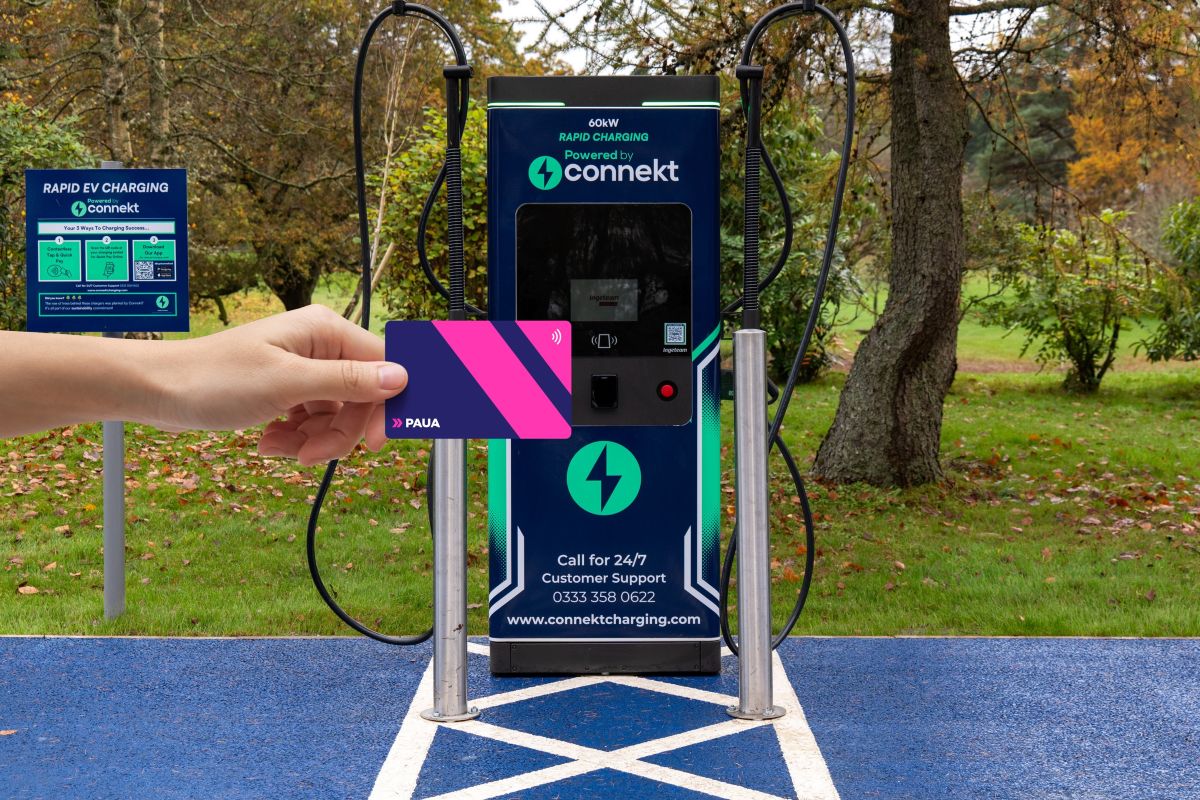
Take networks such as Ubitricity, where many on-street chargers use digital payment methods rather than physical bank-card terminals.
At Paua, we've spent years connecting charging networks using digital integrations and RFID technology. Today, we provide access to more than 100,000 UK charging connectors.
That coverage matters to fleet operators.
A payment card accepted by millions of shops is little use when the charger your driver needs cannot accept it.
2. Paying for a charge isn't the same as managing a charging session
When someone buys a coffee, the card issuer needs to know the merchant and transaction amount.
EV charging works differently.
A fleet manager needs to understand:
- Which driver and vehicle used the charger?
- Where and when did charging take place?
- How much electricity was delivered?
- What was the price per kWh?
- Was the session successful?
- Could a different charging location have reduced costs?
At Paua, our integrations can provide charging-session updates every 5 to 15 seconds, depending on the network.
Traditional bank-card transaction data doesn't routinely provide that level of detail.
A card network might eventually support richer charging data, but the information still needs to come from the charging infrastructure.
The payment is just one part of the transaction. The data makes it useful to a fleet.
3. Specialist EV charging cards can reduce opportunities for fraud
One argument for conventional payment cards is that they offer sophisticated fraud prevention.
That's certainly true. The global banking networks have invested enormous sums in detecting suspicious transactions.
But specialist EV charging cards prevent many categories of misuse by design.
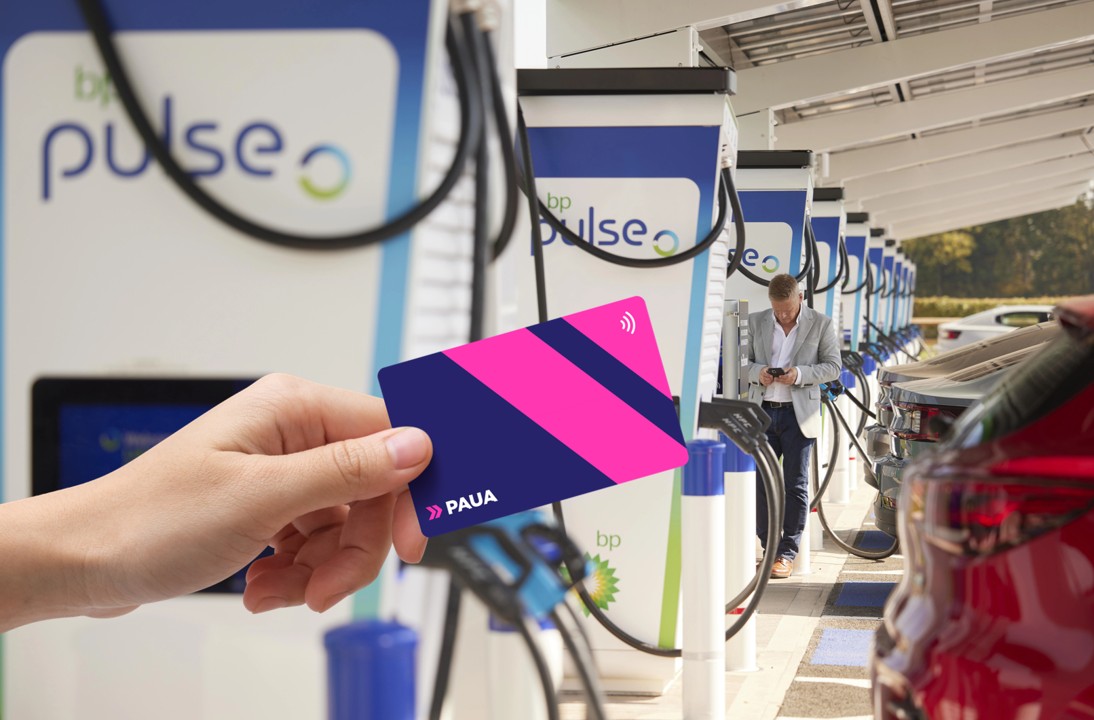
A Paua RFID charging card cannot buy cigarettes, groceries or a tank of diesel. It is designed to authorise electric vehicle charging.
We can also identify the charging location, time, user and energy consumed.
Of course, that doesn't eliminate every form of misuse. An employee might charge a vehicle outside company policy, or lend their card to someone else.
But those are often fleet management and employee policy issues rather than conventional payment-card fraud.
Why introduce the ability to spend money at thousands of other merchants when the driver only needs to charge an EV?
4. Home charging cannot be solved with a credit card
For many commercial fleets, home charging is an essential part of their electrification strategy.
And home charging presents a fundamentally different payment problem.
An employee plugs their electric company car into their home charger. The electricity appears on their household energy bill.
Who pays?
The employee has purchased the electricity from their domestic supplier. The employer needs to reimburse the appropriate business expense.
A Visa or Mastercard transaction at a public charging station cannot solve that problem.
The fleet needs a system capable of measuring or estimating eligible energy consumption, applying the appropriate reimbursement tariff, and arranging payment to the employee or their energy supplier.
This is why Paua developed Paua Reimburse.
It connects home charging and reimbursement into the wider fleet payment system.
You cannot solve every fleet energy payment problem by putting a bank-card terminal in front of it.
5. Workplace and depot charging require access controls, not just payments
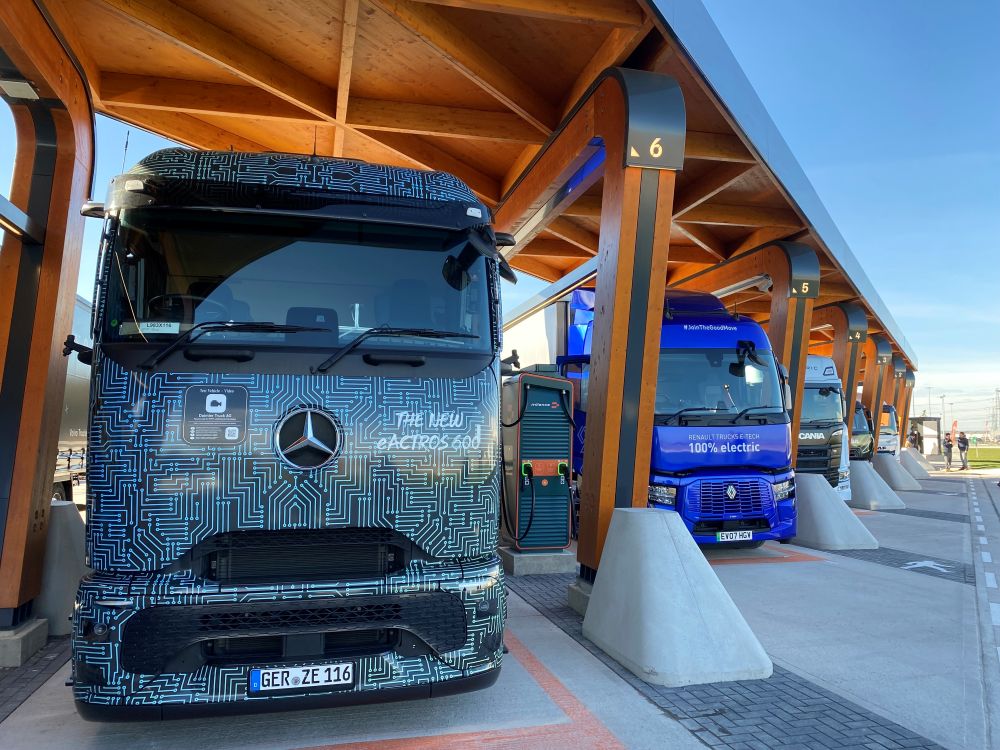
Consider an electric truck arriving at a logistics depot.
The site might have sophisticated charging infrastructure, but it may not be open to the public.
The depot operator needs to decide which vehicles can charge, whether the visiting fleet has permission, and who should receive the bill.
We encounter this regularly through Paua Share, which enables fleets to access participating private charging depots.
A conventional bank card does not automatically provide permission to enter a depot, access a specific charger or apply the commercial arrangements agreed between operators.
The same principle applies to workplace charging.
These are questions of identity, permissions, energy management and commercial agreements.
Payment comes afterwards.
6. Open-loop payments create problems for fleet spending controls
The payments industry often describes Visa and Mastercard as open-loop networks.
This means a card can be accepted by many different merchants, rather than being restricted to one provider or a defined network.
For most consumers, that's brilliant.
For fleet managers, it introduces a problem.
A card that can buy almost anything needs controls to ensure drivers only buy what the business has authorised.
Imagine issuing 500 drivers with conventional payment cards.
How do you stop them buying groceries, cigarettes or other unrelated goods?
And how do you know what they've actually purchased?
One solution is to restrict transactions using Merchant Category Codes (MCCs). These codes identify the type of business accepting a card.
There is a specific MCC for EV charging: 5552.
But the system has limitations.
A charging operator may use a different classification, particularly where a business provides both parking and charging. Merchants aren't always categorised consistently across payment arrangements.
This creates a dilemma.
Set restrictions too tightly and you risk rejecting legitimate charging transactions.
Relax the restrictions and you may allow purchases the fleet never intended to authorise.
Even an approved merchant category doesn't necessarily prove what was bought. A merchant classification identifies the business, not every product on the receipt.
The fleet then needs additional controls, reporting and reconciliation processes.
Compare that with a specialist RFID charging card.
The card authorises a charging session through a network specifically designed for EV charging. It cannot be used at a supermarket checkout.
The transaction is linked to charging infrastructure, with energy consumption and session data.
Why start with a payment card that can buy almost anything, then spend time and money trying to restrict it to buying electricity?
For dedicated EV charging, a closed-loop system has a very practical advantage.
7. The future may not involve cards at all
Perhaps the biggest challenge to the idea of bank cards replacing specialist EV charging cards is that the long-term future may involve removing the physical card entirely.
ISO 15118 supports a technology known as Plug & Charge.
Rather than tapping a card or opening an app, the driver connects the charging cable and the vehicle authenticates itself using digital credentials.
The charging session can then begin automatically, with billing handled through the associated service provider.
It's an elegant approach.
There are challenges involving compatibility, certificates, roaming agreements and adoption across different vehicle and charging manufacturers.
But it points towards something important.
The natural next step for EV charging may be to integrate identity and payment directly into the vehicle.
Why replace an RFID card with a bank card if, eventually, neither is needed?
8. A credit card payment doesn't automatically provide a VAT receipt
This is one of the less glamorous, but more important, aspects of fleet charging.
A payment card transaction is not the same as a VAT invoice.
When a driver pays for charging using a conventional bank card, the payment may appear on the company's bank-card statement.
But that statement doesn't necessarily identify the electricity supplied, the applicable VAT rate or the VAT amount.
For a business seeking to recover input VAT, that matters.
At an unattended charging station, obtaining a compliant VAT receipt may require the driver to visit a website, register their details, enter a transaction reference or request an invoice separately.
Now imagine hundreds of drivers using dozens of different charging networks.
Someone in the accounts team needs to gather, verify and reconcile those documents.
A specialist fleet charging platform can consolidate eligible charging transactions and provide appropriate VAT documentation through an established invoicing relationship.
At Paua, consolidated billing is an essential part of the service we provide to business customers.
The card itself is simply the way the driver starts the charge.
The finance department needs much more than proof that a payment succeeded.
9. A bank card doesn't tell drivers where to charge
One final problem is easily overlooked.
A driver with a Visa or Mastercard can pay at a compatible charging station.
But how do they find that charger in the first place?
Fleet drivers need to know where they can charge, whether a charger is available, how much it costs and whether it suits their vehicle.
For electric trucks, those questions become even more important.
A truck driver needs charging infrastructure with suitable power, access, parking space and vehicle clearance.
A bank card doesn't provide this information.
So the fleet or its payment provider still needs access to a charging map, reliable location data, pricing information and ideally live charger availability.
That means building or integrating a specialist software platform.
At Paua, our map connects drivers to our aggregated charging network, including filters designed for larger commercial vehicles.
It is an essential part of helping drivers complete their journeys.
If you need to build a specialist EV charging platform to tell drivers where they can use their bank card, what exactly has the bank card replaced?
So, do conventional payment cards have a future in fleet charging?
Absolutely.
There is one use case I find particularly interesting: the transition from diesel to electric fleets.
Most businesses cannot electrify their entire fleet overnight.
They may operate electric vans alongside diesel trucks, with drivers needing to pay for fuel, electricity, tolls and AdBlue.
A conventional payment card could support those additional purchases.
Combined with a specialist EV charging platform, it might provide fleet operators with a broader payment solution during the transition.
That is an interesting opportunity, and one worth exploring.
But it doesn't eliminate the need for charging integrations, home reimbursement, depot access, VAT documentation, charging maps or detailed energy data.
Those capabilities remain essential.
The future of fleet charging is a platform, not a card
When we launched Paua, we started with a mobile application.
Customers then asked us for a physical RFID card.
Today, around 95% of our public charging transactions still use RFID cards.
That doesn't mean RFID will last forever. It means the technology works for the fleets we support today.
Over time, we expect the physical card to become less important as vehicles, chargers and software platforms communicate more directly.
What will remain important is the ability to manage charging wherever it happens: at home, at work, in private depots and across public networks.
That's the real challenge for fleet electrification.
The future isn't about finding another way to pay. It's about making the entire charging experience work for the driver and the business.
And that requires much more than a credit card.